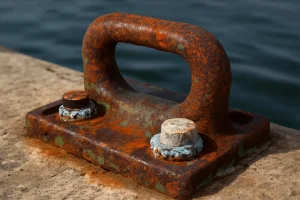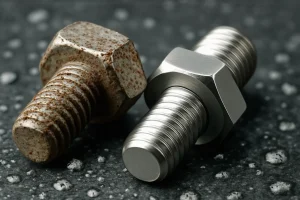
A contractor I know charges $12,000 to replace fasteners on a neglected 40-foot dock. A Saturday afternoon with the right hardware costs maybe $300. The gap isn’t about labor — it’s about what happens when you buy the wrong fasteners and let them sit in saltwater for three years. I once dismantled a dock section that a homeowner had confidently called “marine grade.” Every fastener had deteriorated into a brittle, orange-tinted remnant. The wood beneath each one showed rust bleeding outward and soft rot spreading from the hole. The culprit: hardware-store screws stamped “stainless” that turned out to be Type 304 — absolutely inadequate for saltwater conditions. The problem with a bad fastener isn’t merely that it fails. It actually deteriorates the timber surrounding it, turning a fastener problem into a structural problem.
Two decades of Gulf Coast marine construction, then a shift into DIY guidance, have put me in front of tens of thousands of fastening jobs — and I’ve extracted just as many compromised ones. My understanding of what actually works in saltwater came through boots-on-the-ground troubleshooting, expensive warranty claims, and a collection of hard-earned mistakes. This article represents everything I’ve learned from that accumulated experience.
| Fastener Type | Chromium | Nickel | Molybdenum | Saltwater Lifespan |
|---|---|---|---|---|
| Type 304 Stainless | 18% | 8% | None | 2 seasons |
| Type 316 Stainless | 18% | 8% | 2-3% | Sustained resistance |
| Hot-Dipped Galvanized | — | — | — | 12-18 months |
Why Saltwater Destroys Ordinary Fasteners So Fast
Saltwater doesn’t simply cause rust — it triggers electrochemical deterioration at velocities that most homeowners underestimate. Galvanized or zinc-coated screws do have a protective layer. That coating, however, degrades the moment torque is applied during installation, and saltwater then attacks the underlying steel with astonishing speed. For docks in coastal zones, this process can render a galvanized screw unusable in just 12 to 18 months.
Galvanic corrosion presents another serious concern. Whenever two distinct metals touch in a saltwater context, the chemically less resistant one deteriorates. Combining aluminum hardware with steel fasteners on a saltwater structure guarantees failure progression on both — sometimes rapidly. Grasping this mechanism is essential to selecting fasteners that will actually last.
Both the American Institute of Timber Construction and the International Building Code establish requirements for corrosion-resistant fastening in marine contexts. AWPA guidance for pressure-treated lumber specifically calls for hot-dipped galvanized or stainless fasteners. When working in saltwater, however, I consistently bypass galvanized options and specify Type 316 stainless instead.
316 Against 304 Stainless: Understanding the Critical Distinction
This is the distinction where most DIYers experience failure. Both 304 and 316 stainless appear indistinguishable when new. They perform similarly in your hand. The packaging often looks nearly identical. What separates them is metallurgical composition — and that separation becomes enormous when saltwater enters the equation.
Type 304 contains approximately 18% chromium and 8% nickel, delivering adequate corrosion defense in fresh or moderately damp conditions. However, molybdenum — the element conferring resistance to chloride-driven pitting — is absent. Chlorides, of course, dominate saltwater chemistry. I’ve extracted 304 fasteners from dock planks after merely two seasons that exhibited corrosion patterns suggesting decades of burial in soil.
Type 316 incorporates 2-3% molybdenum into its composition. That addition produces substantially superior performance against chloride penetration. Across my two decades navigating the Gulf Coast environment, nothing below 316 stainless should ever enter a saltwater dock fastening specification. Without exception. When something doesn’t explicitly state 316, treat it as 304 and look elsewhere.
Consideration for Hot-Dipped Galvanized
Hot-dipped galvanized fasteners remain defensible for freshwater or brackish environments with minimal salinity. In genuine saltwater conditions, however, HDG fails within several years. Around 2008, I stopped advising HDG for any Gulf installation after observing too many premature failures requiring reinstallation. Choose HDG for freshwater or river docks. Where saltwater is present, justify the additional expense and select 316 stainless.
Type 316 Fasteners That Resolved My Corrosion Problem
That incident with the rust-stained dock taught me that “stainless” labeling masks enormous variation — and that conventional hardware retailers simply don’t stock what saltwater construction demands. Type 316 stainless represents the appropriate metallurgical choice for marine applications, yet sourcing adequate quantities in the correct diameter and head configuration often presents logistical challenges.
Strengths
- Type 316 stainless withstands pitting and crevice failure modes even under continuous saltwater exposure — no more rust-colored streaks on timber surfaces after a few seasons.
- Ordering in bulk (1,200-unit quantities) eliminates mid-project supply shortages and sidesteps per-unit markup from specialized marine suppliers.
- T25 star-drive geometry seats firmly in pressure-treated and composite wood without skipping or deformation, particularly when working unassisted on wet surfaces.
Limitations
- Per-unit expense exceeds discount hardware store offerings — though the difference becomes negligible compared to repairing or replacing timber compromised by corrosion years later.
- A 1,200-unit box exceeds requirements for isolated repairs; leftover stock may accumulate on shelves unless you’re executing several dock restoration projects or maintaining multiple installations.
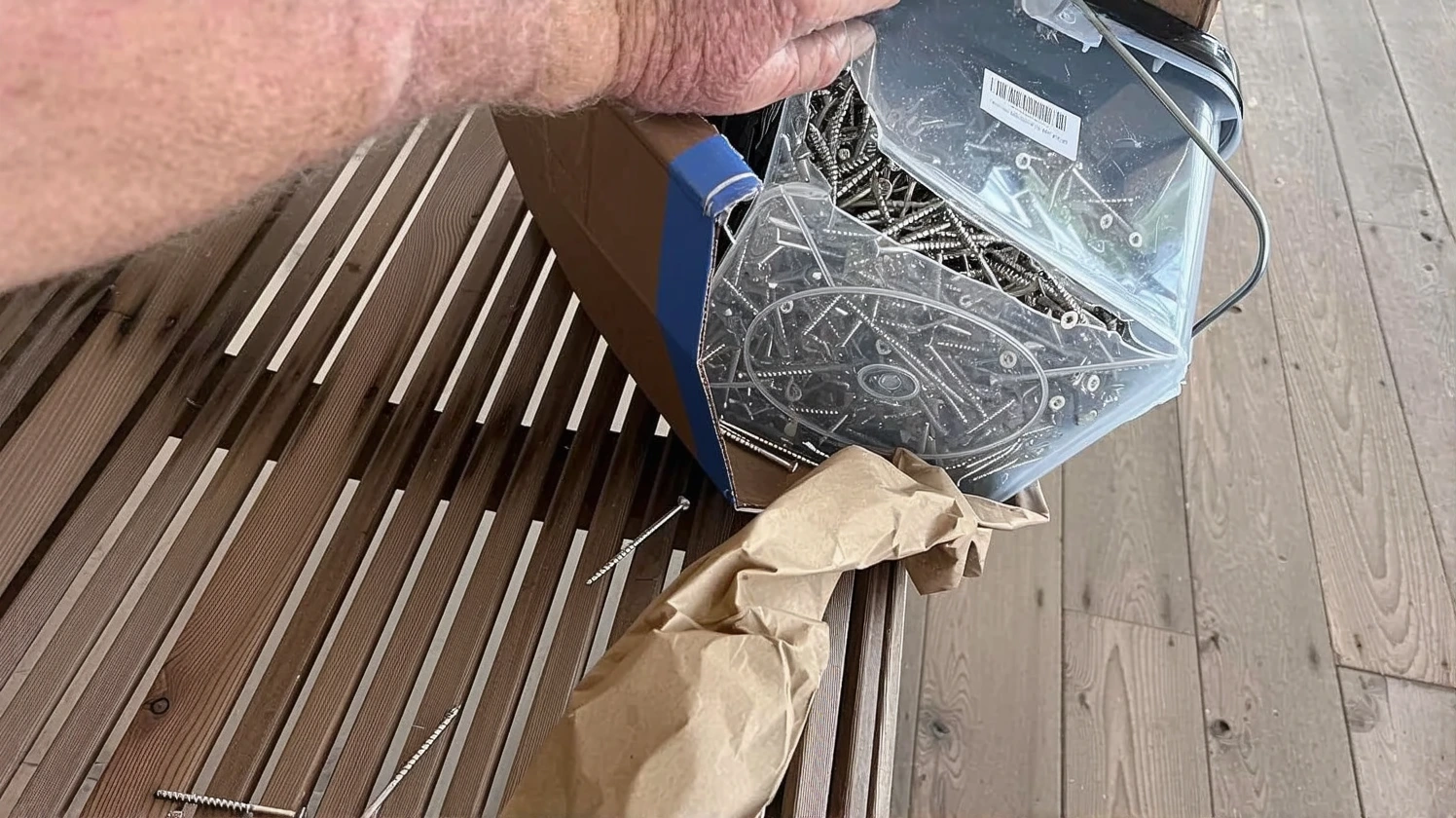
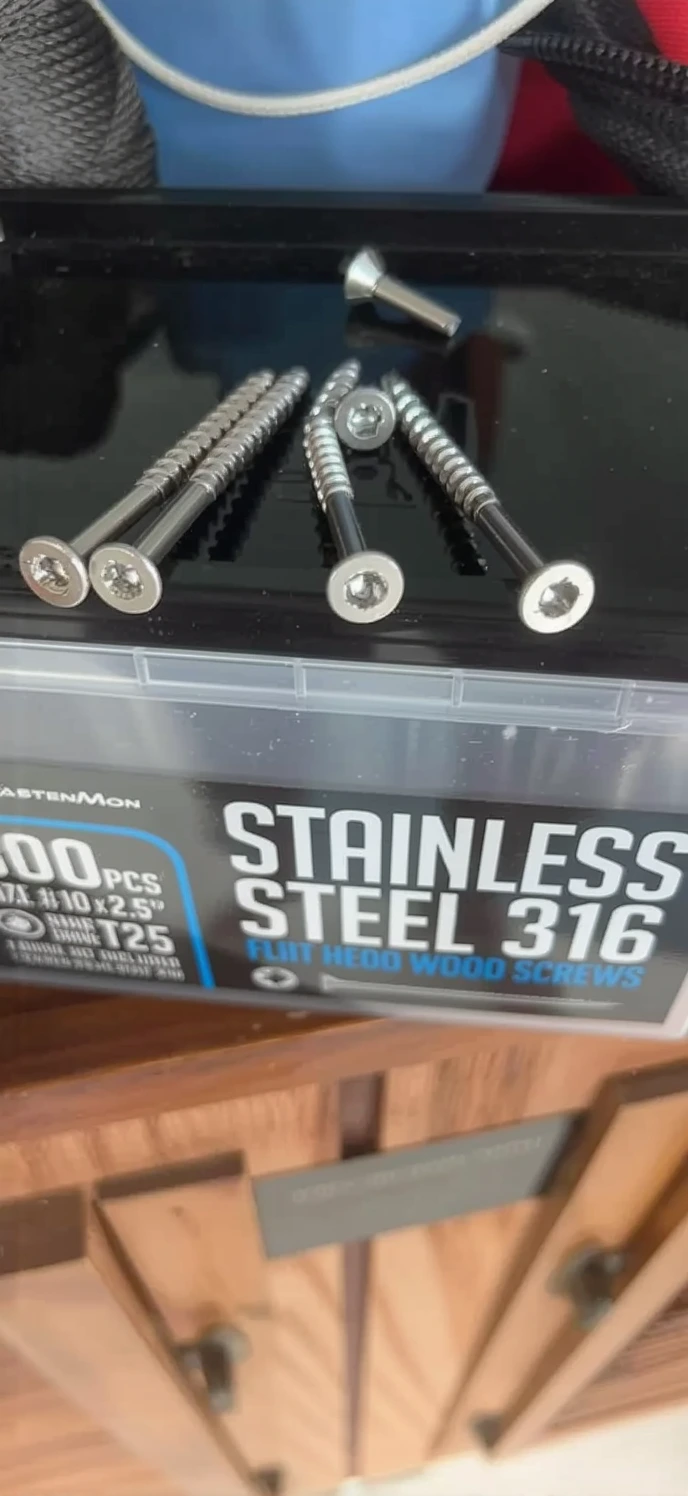
I’ll admit—when I first priced Type 316 bulk packs, I winced and almost grabbed the cheaper option out of habit. But after replacing that rotted dock and watching zero corrosion on the new fasteners over two full seasons, the math made itself clear. Grab the FM FastenMon #10 x 3 Marine Grade Type 316 Stainless Steel Wood Screws (1,200 Pack with T25 Bit) and stop betting your dock’s future on hardware store luck.
Frequently Asked Questions
Why did my stainless steel dock screws rust after two seasons?
You likely used Type 304 stainless instead of Type 316. Type 304 lacks molybdenum, the element that resists chloride-driven pitting in saltwater. I’ve pulled 304 fasteners from dock planks after merely two seasons showing corrosion suggesting decades of burial. Type 316 stainless is the only grade that should enter a saltwater dock specification.
Can I use galvanized fasteners on my Gulf Coast dock?
Hot-dipped galvanized fasteners fail in saltwater within several years. The protective coating degrades during installation torque, and saltwater then attacks the underlying steel rapidly—sometimes rendering a screw unusable in 12 to 18 months. Use HDG only for freshwater or river docks. For saltwater, justify the additional expense and select Type 316 stainless.
What size fasteners work best for saltwater dock wood?
I use FM FastenMon #10 x 3 Marine Grade Type 316 Stainless Steel screws with T25 star-drive geometry. This configuration seats firmly in pressure-treated and composite wood without skipping or deformation, particularly when working unassisted on wet surfaces. Sourcing them in bulk 1,200-unit quantities eliminates mid-project supply shortages.
How much money can I save by replacing dock fasteners myself?
A contractor charges $12,000 to replace fasteners on a neglected 40-foot dock. A Saturday afternoon with the right hardware costs maybe $300. The gap isn’t about labor—it’s about selecting Type 316 stainless that actually resists saltwater deterioration rather than compromising your dock’s timber structure.
Sources and further reading
About This Article

Written by Trent Hollis. Waterfront homeowner turned DIY obsessive. After two decades tinkering with my own dock, seawall, and boat lift on the Gulf Coast, I share everything I've learned about waterfront construction, boat lift maintenance, and coastal living projects. More about this site.
Scope and limits. Trent is a waterfront homeowner, not a licensed marine contractor. Structural, electrical, and lift work should go to a licensed marine contractor, and most in-water work needs a permit before you start.
Verify this against a primary source
Specifics change, and your situation may differ from the one described here. These are the authorities worth checking directly:
- ABYC — marine electrical and construction standards
- U.S. Army Corps of Engineers — permitting for work in navigable waters
- NOAA Tides & Currents — tidal range and water level data for your site