Eighteen months into running my own marine contracting business, I hauled a brand-new aluminum dock frame out of the Gulf that looked like it had been through an orbital sander. Pitting scarred the entire surface. The structure was already weakening. Galvanic corrosion had done the damage — and the owner hadn’t spotted a single warning sign until the deterioration was far along. If you’re reading about galvanic corrosion dock solutions right now, you’re already one step ahead of most waterfront property owners. The majority of people discover the problem only after staring down a repair estimate pushing past $3,000.
Two decades spent constructing, maintaining, and assessing dock systems across the Gulf Coast has put me in some of the harshest saltwater conditions the region offers. I’ve documented galvanic corrosion eating through stainless fasteners, ravaging aluminum pontoon structures, and snapping boat lift cables within roughly 24 months. The encouraging part? It’s absolutely avoidable. This piece walks you through exactly how I spot the problem, interrupt it, and keep it from returning — grounded in fieldwork, not factory literature.
What Galvanic Corrosion Actually Is (And Why Your Dock Is Vulnerable)
When people say “corrosion,” most picture rust. Galvanic corrosion operates on entirely different chemistry. The process kicks off when dissimilar metals touch electrically in an electrolytic medium — which on your dock means seawater. One metal turns into the anode and deteriorates as a sacrifice. The opposite metal becomes the cathode and stays protected. The catch: you didn’t decide which one would be sacrificed. Electrochemistry made that determination for you.
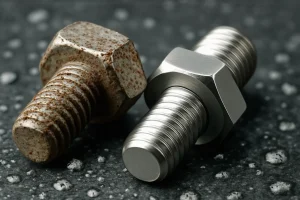
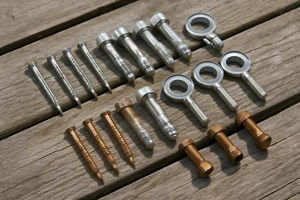
The galvanic series organizes metals according to their electrochemical position. Zinc occupies the reactive side of this scale. Bronze and stainless occupy the noble side. Bolt a stainless steel fastener through an aluminum dock beam and submerge them both in seawater, and the aluminum deteriorates rapidly. The greater the separation between two metals on that series, the more vigorous the attack. Certain pairings — aluminum coupled with copper, for instance — create voltage differentials reaching close to 0.8 volts. In warm Gulf saltwater, that potential is enough to trigger major structural breakdown in a single season.
The Gulf’s conditions — temperature, salt concentration, conductivity — accelerate this electrochemical reaction far faster than what happens in freshwater. Based on my field records, submerged aluminum in saltwater absent any protective system can develop visible pitting within half a year. That’s documented on projects spanning Pensacola down through Mobile Bay.
Spotting Galvanic Corrosion Before It Compromises Your Dock
Visual inspection backed by proper technique is where you begin. Get down in your waders or strap on a mask — you’ve got to examine areas beneath the water surface. On every job I assess, I’m checking for these specific markers:
- Chalky white or gray film settling on aluminum surfaces — that’s oxidized aluminum announcing itself
- Cratering or surface holes on aluminum structural elements or flotation tubes adjacent to stainless or bronze bolts
- Progressive breakdown along submerged steel wire rope, particularly at swage points and connection zones
- Color shift on copper-alloy hardware — shifting from standard yellow toward copper-red (dezincification)
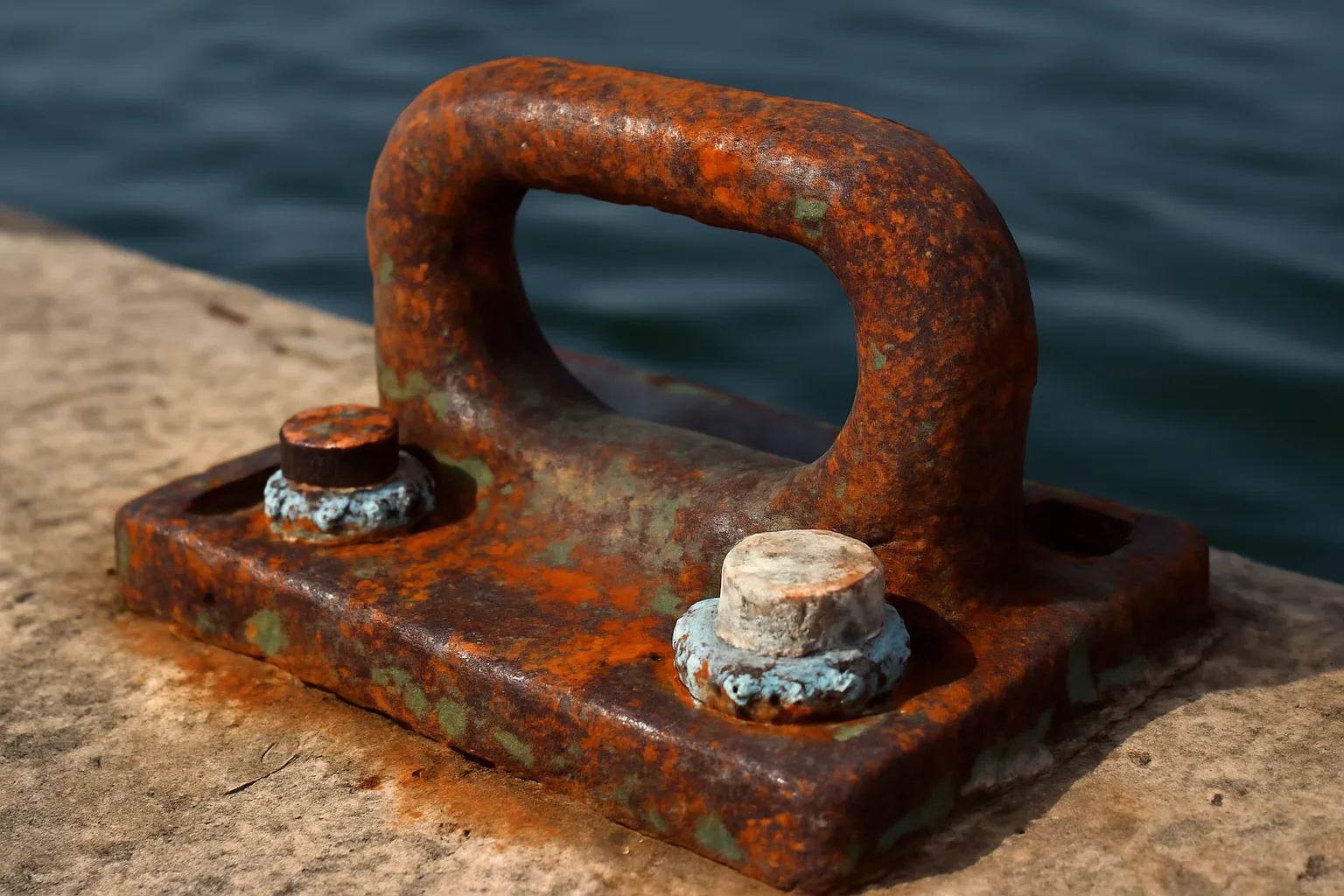
- Rust progression on iron components that seems out of proportion to how long they’ve been in service
To make your diagnosis more definitive, grab a silver/silver chloride test electrode paired with an accurate multimeter. Check the electrical potential of submerged components against that reference. For aluminum components, target readings between -950 mV and -1,100 mV measured against Ag/AgCl. Numbers higher than -950 mV signal under-protection, meaning active corrosion is underway. ABYC Standard E-2 spells out the cathodic protection specifications required for marine vessels and dock platforms — it’s the technical standard I’ve leaned on for years.
I didn’t always know to use that measurement approach. Early on, I relied on eyeballing a dock and declaring it acceptable, then came back months later to discover two boat lift arms had corroded past repair. Forty-five minutes with testing equipment would have caught the issue before it spread. That’s why I never skip the electrical measurement step anymore on any saltwater installation.
Stopping Galvanic Corrosion: The Sacrificial Zinc Anode Solution
Sacrificial anode cathodic protection delivers the best combination of cost-effectiveness and results. The logic is elegant: you fasten a material even lower on the galvanic series than your dock’s metal parts. That material — typically zinc — corrodes instead of everything around it. It burns up protecting your aluminum beams, steel rigging, and mechanical hardware.
Zinc remains the preferred choice for saltwater use. Aluminum anodes perform adequately as well, but zinc enjoys superior availability and consistent reliability in the warm, salt-saturated conditions of the Gulf. Never use magnesium anodes in saltwater — reserve those exclusively for freshwater systems. The reaction velocity in seawater overwhelms them, and they’ll vanish in weeks. I’ve seen newer contractors make this specific error repeatedly.
The installation itself isn’t complicated, though location is everything. Anodes must establish solid electrical contact with the surfaces they shield — this happens either through direct fastening or a connecting wire. Additionally, the zinc must remain submerged at all times. An anode exposed to air during low-tide periods contributes nothing during those critical hours. For lift equipment with vertical supports, I secure anodes directly to the submerged sections of the support posts and run electrical cables bonding them to any isolated metal hardware — pump motors, cable reels, bunk supports.
Calculating Anode Quantity
The submerged surface determines your requirements. Using practical experience from the field: approximately one pound of zinc anode per 6 to 8 square feet of exposed aluminum submerged in Gulf saltwater. A standard residential-grade boat lift featuring aluminum lift arms requires somewhere in the range of 4 to 8 pounds of zinc distributed across multiple spots. Large floating dock installations can demand 20 pounds or beyond. Skimping on anode mass to reduce initial spending gets expensive quickly when you’re facing aluminum replacement costs.
Every half-year, examine your anodes. Swap them out once they’ve consumed approximately half their original bulk. In the warm saltwater offshore from the Gulf, annual replacement cycles are typical for most residential setups. Plan on spending between $20 and $60 per anode, varying with weight and attachment design.
The Sacrificial Zinc Solution That Saved My Aluminum Frame
That aluminum dock failure taught me that sacrificial anodes aren’t a luxury option — they’re essential protection. A reliable zinc anode burns up in your place, but the installation and upkeep must be done correctly.
The advantages
- Halts aluminum pitting visibly within several weeks — by my second season, the results on my dock were unmistakable.
- Operates independently without needing shore-power electrical systems or external energy sources.
- Fastens with bolts, letting you protect existing dock installations without tearing apart the framework.
The limitations
- Zinc depletes gradually and requires changing every couple of years up to three years based on local water mineral composition — it’s an ongoing commitment, not a permanent repair.
- Fails to prevent deterioration if the anode lacks proper electrical bonding to aluminum surfaces or if incompatible metals remain electrically joined.
I’ll admit I was skeptical the first time I installed one—figured it was a band-aid on a bullet hole. But after pulling that new dock frame and seeing what three years of zero protection looks like, I wasn’t taking chances again. Grab a holama Sacrificial Zinc Marine Anode and bolt it to your frame before you regret it.
Frequently Asked Questions
How often should I replace sacrificial zinc anodes on my dock?
Examine your anodes every half-year and swap them out once they’ve consumed approximately half their original bulk. In warm Gulf saltwater, annual replacement cycles are typical for most residential setups, though cycles can extend up to three years depending on local water mineral composition.
How much zinc anode weight do I need for my boat lift?
Use approximately one pound of zinc anode per 6 to 8 square feet of exposed aluminum submerged in Gulf saltwater. A standard residential-grade boat lift featuring aluminum lift arms requires somewhere in the range of 4 to 8 pounds of zinc distributed across multiple spots.
What electrical reading indicates my dock needs cathodic protection?
Use a silver/silver chloride test electrode paired with a multimeter to measure submerged aluminum components. Target readings should fall between -950 mV and -1,100 mV. Numbers higher than -950 mV signal under-protection, meaning active corrosion is underway.
Can I use magnesium anodes instead of zinc in saltwater?
Never use magnesium anodes in saltwater—reserve those exclusively for freshwater systems. The reaction velocity in seawater overwhelms them and they’ll vanish in weeks. Zinc remains the preferred choice for saltwater use and enjoys superior availability and consistent reliability in Gulf conditions.
Sources and further reading
About This Article

Written by Trent Hollis. Waterfront homeowner turned DIY obsessive. After two decades tinkering with my own dock, seawall, and boat lift on the Gulf Coast, I share everything I've learned about waterfront construction, boat lift maintenance, and coastal living projects. More about this site.
Scope and limits. Trent is a waterfront homeowner, not a licensed marine contractor. Structural, electrical, and lift work should go to a licensed marine contractor, and most in-water work needs a permit before you start.
Verify this against a primary source
Specifics change, and your situation may differ from the one described here. These are the authorities worth checking directly:
- ABYC — marine electrical and construction standards
- U.S. Army Corps of Engineers — permitting for work in navigable waters
- NOAA Tides & Currents — tidal range and water level data for your site