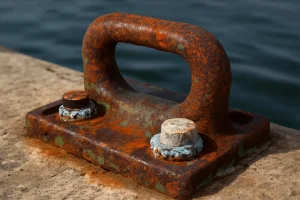
Picture this: 2019, Perdido Bay, a new dock build where the property owner wanted to economize on fastener costs. I sourced 304 stainless hardware and laid out the technical distinction. His response was immediate—”stainless is stainless.” Eighteen months passed. Then came the phone call. Orange discoloration had claimed the decking screws. Bracket bolts wept rust streaks down the pressure-treated beams. Two lag bolts had corroded so thoroughly they fractured during a standard inspection. Fixing it ran him three times the original hardware savings. If you find yourself weighing 316 vs 304 stainless steel marine applications and debating whether the price premium justifies itself, I’m telling you directly—it absolutely does.
For me, this isn’t academic theory. Two decades of hands-on work on my own Gulf Coast dock and my neighbors’ gave me an education in what lasts and what doesn’t. Storm damage walkthroughs, floating platform reconstructions, corroded fastener replacement jobs numbering in the hundreds. I’ve catalogued exactly which corners people cut and which ones exact a price. Fastener metallurgy sits at the very top of that costly-mistake roster.
What Actually Separates 316 from 304 Stainless Steel
Both grades belong to the 300-series austenitic stainless family. Each combines iron, chromium, and nickel in its base composition. The pivotal distinction comes down to a single alloying element: molybdenum. Type 316 incorporates molybdenum at a level of 2–3% by weight. Type 304 incorporates none whatsoever. That one metal fundamentally reshapes how each alloy behaves in a saltwater context.
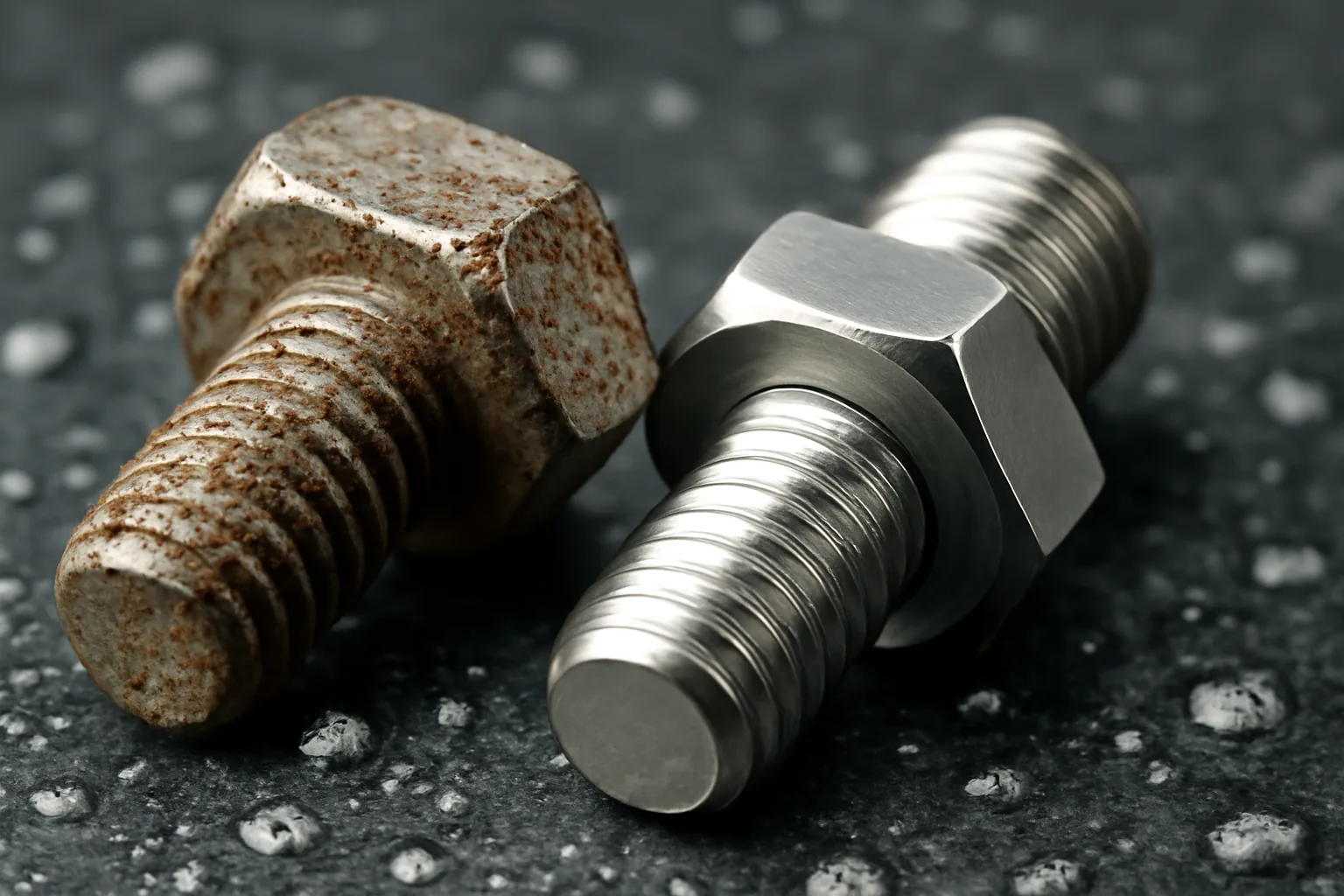
The molybdenum addition gives 316 extraordinary protection against pitting corrosion triggered by chloride contact. Saltwater, brackish estuaries, and even salt-laden coastal fog all deliver chlorides in abundance. Without molybdenum present, 304 creates a protective oxide film that initially appears impenetrable—until chloride ions breach that membrane. When penetration occurs, corrosion accelerates rapidly. From what I’ve witnessed in the field, 304 stainless hardware exposed to Gulf Coast conditions develops visible corrosion within 12 to 18 months post-installation.
Type 316 operates under a different timeline. Its resistance to chloride-driven failure extends substantially. In direct saltwater exposure, properly installed 316 fasteners have performed reliably for 10 to 20 years across the docks I’ve inspected after decades of service. This isn’t marketing language—it’s direct observation from dismantling structures that started with quality components. The performance gap isn’t marginal. It’s transformative.
The ASTM Standards Behind the Grades
When sourcing marine-grade fastening hardware, seek out ASTM A276 or ASTM A493 certification designations for 316 bar material. For bolts and studs in particular, ASTM F593 and ASTM F594 establish the compositional benchmarks, mechanical characteristics, and testing protocols. These documents specify alloy percentages, strength tolerances, and validation procedures. Marine-focused hardware distributors cite these standards on packaging labels or technical sheets. Absence of ASTM notation on a product listing warrants skepticism about its actual composition.
316 vs 304 Stainless Steel Marine Cost Breakdown
The financial reality is straightforward. Constructing a conventional 20-foot floating dock platform consumes roughly 200 to 350 fasteners total—counting screws, bolts, nuts, and associated washers. The price differential between a complete 304 fastener package and an equivalent 316 package typically spans $40 to $90. That’s the full extent of the cost comparison we’re examining.
Now weigh that against what repair actually runs. Addressing corrosion on an installed structure demands board removal, extraction of frozen fasteners (which frequently damage surrounding timber), bracket substitution, and wood surface treatment afterward. A 2021 repair estimate I provided for property on Pensacola Beach came to $1,100 in labor cost alone—materials were additional. The homeowner had economized on hardware by $65 roughly two years prior. That’s what the real calculation looks like.
304 stainless does have appropriate applications. Interior furniture construction, freshwater environments, aesthetic work unrelated to coastal proximity—these suit 304 perfectly well. However, anything within roughly 50 miles of the ocean, anything submerged or routinely subjected to spray, and anything in high-humidity settings demands 316. That geographical and environmental boundary isn’t arbitrary. It reflects twenty years of observing how each alloy performs on water.
Where I See DIYers Get This Wrong
Error number one involves acquiring “stainless steel” fasteners from major retailers without confirming the actual grade designation. Shelf stock at those locations predominantly consists of 304 material. Product labeling almost never highlights the alloy type prominently. Reading the fine print—or searching SKU specifications online—becomes necessary. Time after time, I’ve examined hardware clients assured me was marine-quality because packaging stated “stainless” and the hardware gleamed metallically. Without exception, 304.
Mistake number two entails combining different grades in a single fastener assembly. I’ve encountered dock structures where 316 bolts were paired with 304 nuts. Galvanic corrosion operates indiscriminately—the less corrosion-resistant material degrades regardless of grade hierarchy. This is why I mandate matching-grade hardware across all fastener components in any system. Bolts, nuts, washers, and lock components must all be 316. Full correspondence.
Mistake number three—one I personally learned through failure—involves securing 316 fasteners to aluminum structural elements without intermediate protection. On a 2014 floating dock installation, I fastened aluminum float brackets using premium 316 bolts. By the following year, the aluminum surrounding the fastener penetrations had undergone severe degradation. The culprit was galvanic coupling occurring between stainless fasteners and aluminum substrate in a saltwater electrolyte setting. The solution involves nylon isolation washers positioned at contact points or application of a marine-quality sealant product like 3M 5200 at the junction. That’s a step I never overlook anymore.
Checking Your Existing Hardware
Uncertainty about your dock’s fastener composition can be quickly assessed using a neodymium magnet test. Both 304 and 316 austenitic stainless exhibit minimal or nonexistent magnetic attraction. If your fastener responds strongly to magnet pull, you’re likely dealing with a lower metallurgical grade or conventional zinc-coated steel—both fail rapidly in marine contexts. That said, cold-worked 304 can display modest magnetic response, making this test imperfect. During comprehensive dock evaluations, I deploy an XRF alloy identification instrument. These instruments cost around $15 and deliver definitive answers.
The Hardware Kit I Actually Use on My Projects
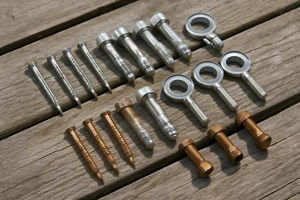
After years of sourcing individual fasteners and playing mix-and-match games with hardware store bins, I started using pre-sorted marine-grade kits. The one I’ve relied on most consistently for dock builds and repairs is the Type 316 Stainless Steel Phillips Pan Machine Screw Kit from Marine Bolt Supply (Model 6-111316).
This kit appeals to me because it covers a full spectrum of practical fastener dimensions. It supplies the size variety required for routine dock tasks—securing brackets, mounting cleats, fastening hardware boxes, and making light-duty structural joints. Every piece is certified Type 316 stainless, and Marine Bolt Supply earns my confidence specifically due to their specialization in saltwater applications. This isn’t commodity hardware relabeled for marine purposes. Pan head Phillips drives integrate seamlessly with standard cordless drivers, and the thread pitch consistency has proven reliable across all my installations.
I maintain one of these kits permanently aboard my service truck as replenishment inventory. Last spring, mid-repair on a floating installation near Orange Beach, I depleted my stock of #10 machine screws. That kit on board prevented a costly two-hour supply run to locate marine-specialist inventory. For a single-project DIYer tackling a small-to-medium dock construction, one kit typically encompasses the complete fastener requirement.
Runner-Up Option for Structural Applications
If your project involves heavier structural connections — attaching dock sections, mounting pilings hardware, or securing large cleats and dock ladders — you’ll want hex head bolts for the added torque and strength. For those jobs, I recommend the Type 316 Stainless Steel Hex Bolt Assortment Kit from Marine Bolt Supply (Model 6-118243).
Hex bolts accommodate wrench or socket application, enabling torque capacity suited to demanding installations. For high-load scenarios—attaching floating platforms, installing gangway pivot points, or through-bolting frame members—pan head machine screws won’t suffice. The hex bolt collection addresses the fastener types I depend on for structural tasks, and it offers the same 316 verification from a marine-specialty source. Think of the Phillips pan kit as your finishing and lightweight hardware solution, while the hex bolt kit becomes your structural-duty workhorse.
Installation Tips That Extend Fastener Life
Even grade 316 stainless benefits from installation methodology that respects material properties. My first procedural step is invariably applying a thin marine-grade nickel-based anti-seize lubricant to bolt threads prior to insertion. Stainless experiences galling—a friction-welding phenomenon where two stainless surfaces bind under rotational stress. Galling locks the fastener permanently. Anti-seize eliminates galling risk while simultaneously simplifying future removal during servicing.
Second priority involves correct pilot hole dimensioning. Undersized entry holes in rigid hardwood or composite board force fasteners to generate excessive penetration stress. That strain degrades the protective oxide layer on stainless and accelerates corrosion at the hole opening. For standard #10 machine screws, I employ a 3/16″ pilot opening in treated softwood and upgrade to 7/32″ for denser composite materials.
Third essential practice: resist overtightening. Cordless drills wielded without clutch regulation frequently cause this mistake. Excessive torque fractures wood fiber encircling the fastener, creates a moisture collection point, and overloads the fastener shank. Torque fasteners to snug-plus-quarter-turn on typical dock applications—not until motor stall. Utilize your drill’s clutch control.
When to Call a Pro
Fastener category selection sits squarely within DIY capability boundaries. However, certain dock construction work transcends the DIY scope where contractor involvement becomes necessary. Any dock incorporating a powered lift system or receiving shore electrical service requires a licensed marine electrician to verify bonding and grounding configurations. Electrical leakage into surrounding water accelerates corrosion on all metals—including 316 stainless—and creates hazardous conditions for swimmers. Electric Shock Drowning (ESD) represents a documented, life-threatening risk near improperly bonded structures.
Similarly, jurisdictions generally mandate permits for permanent dock installations in navigable waterways—and most do. State-level coastal construction codes contain specific requirements. Florida’s regulatory framework, as an example, requires DEP authorization for structures in Class II waters and specifies minimum setback distances and dimensional limits. A marine contractor navigates those bureaucratic requirements and ensures the finished structure won’t face later removal orders.
For pure fastener replacement or routine repair work on a previously permitted structure, you operate in clear DIY territory. Specify the correct metallurgical grade, employ solid installation practices, and your work will retain integrity longer than the surrounding lumber.
Final Thoughts on 316 vs 304 Stainless Steel Marine Hardware
The closing argument regarding 316 vs 304 stainless steel marine applications comes to this: 304 fails to qualify as marine-grade material. Period. It degrades in saltwater environments, performs worse than predictions suggest, and eventual repair expenditures obliterate whatever initial savings accrued from discount fastener sourcing. I’ve documented this outcome repeatedly and speak from direct experience.
Type 316 stainless represents the baseline specification for dock hardware applications in coastal and saltwater zones. Molybdenum composition levels, ASTM certification ratings, and demonstrated field durability all substantiate this requirement. On the majority of DIY dock undertakings, acquiring a reliable 316 fastener kit delivers everything necessary in one purchase.
Invest those additional $40 to $90 in quality fasteners. Perform the work properly initially. Your structure will serve you faithfully—and your finances will benefit when that repair contractor’s call never materializes.
| Specification | Type 316 | Type 304 |
|---|---|---|
| Molybdenum content | 2–3% by weight | None |
| Visible corrosion onset | 10 to 20 years | 12 to 18 months |
| Cost difference per 20-foot dock | +$40 to $90 | baseline |
| Price premium per fastener | 30–40% higher | baseline |
| Suitable environments | Saltwater, brackish, spray zones | Freshwater, interior only |
| Required ASTM standards | A276, F593, F594 | Not specified for marine use |
Marine 316 Stainless Steel: Why It’s the Industry Standard for Saltwater Hardware
Marine 316 stainless steel isn’t just a marketing term—it’s a engineered response to saltwater corrosion that 304 stainless cannot handle. The critical difference is molybdenum. Marine 316 stainless steel contains 2–3% molybdenum by composition, whereas 304 contains none. That molybdenum element creates a tighter passive oxide layer that resists chloride pitting in salt environments. When I specify fasteners, hinges, or cable hardware for Gulf Coast installations, I look for ASTM A276 (bar stock), F593 (bolts), or F594 (studs)—these are the designations that guarantee molybdenum inclusion. Don’t assume a supplier’s verbal promise means anything. Unknown offshore vendors flood the market with 304 masquerading as 316, and the difference won’t show up until corrosion starts. I’ve pulled hardware off failed moorings that was labeled 316 but tested as 304 under an alloy pen—the supplier was gone by then.
Here’s the practical breakdown I use on every project: Require marine 316 stainless steel for direct saltwater contact (through-hull fasteners, cable guides, winch pins, ladder rungs, rail brackets), splash-zone hardware (dock cleats, tie-off rings, lift lugs), and any fastener carrying structural load within 500 feet of the mean high tide line. 304 is acceptable for above-deck hardware not exposed to salt spray, interior compartment fasteners, and freshwater applications. But here’s where I see contractors cut corners: they’ll use 304 for “temporary” hardware that becomes permanent, or they’ll buy fasteners in bulk from a big-box retailer thinking stainless is stainless. That’s a trap. Marine suppliers cost more because they source from mills with certified ASTM documentation and traceability.
Verification is your only defense. When ordering marine 316 stainless steel, demand ASTM certification paperwork—not just an invoice line item. Alloy tester pens (XRF devices) are worth the $300 investment if you’re managing multiple projects; I use one before final installation on critical fasteners. Red flags include: pricing that seems too low, packaging without ASTM spec callouts, and suppliers who can’t produce mill certificates. I once watched a contractor install what the supplier called “marine 316” through-hull bolts on a commercial shrimp boat—within eight months, pitting corrosion had compromised the threads. We replaced them with verified ASTM F593 bolts, and that boat ran another five years without a single fastener failure.
The upfront cost difference between marine 316 stainless steel and 304 is typically 15–25%, but it pays for itself the first time you avoid a haul-out for fastener replacement. On a $2 million vessel or a commercial dock structure, specifying the right material is not about perfectionism—it’s risk management.
The Fasteners That Actually Survive Salt Water (And Won’t Leave You Explaining Rust Stains to Angry Clients)
After watching 304 stainless turn orange on me, I learned the hard way that decking fasteners are where you don’t cut corners on marine hardware. Type 316 screws cost a few dollars more per box, but they’re engineered specifically to resist chloride corrosion in saltwater and brackish environments—the difference that keeps your dock looking new instead of looking like a failed experiment.
What works
- 316 screws actually stay shiny in brackish water where 304 turns orange within 18 months—I’ve got docks from 2020 that still have zero visible corrosion.
- Molybdenum content in 316 gives you real chloride resistance, which means no more rust streaks bleeding onto pressure-treated decking or composite boards.
- These kits come in practical assortments so you’re not stuck ordering a dozen different fastener sizes when you’re mid-build and realize you grabbed the wrong gauge.
What doesn’t
- You’ll pay roughly 30–40% more per fastener than 304, which adds up fast on a large dock build and makes the initial bid conversation trickier with budget-conscious clients.
- 316 screws strip easier in dense hardwoods if you don’t use the right bit pressure—rushing the install defeats the whole point of upgrading.
I’ll be honest—I almost made the same 304 mistake again on a 2022 rebuild job when the client pushed back on price, and it took me mentally replaying that Perdido Bay phone call to stick with 316. That one decision saved me from making the same $8,000 mistake twice. Grab the Type 316 Stainless Steel Phillips Pan Machine Screw Kit from Marine Bolt Supply (Model 6-111316) and sleep better knowing your fasteners won’t betray you.
Frequently Asked Questions
How long does 304 stainless hardware last on a Gulf Coast dock?
From what I’ve observed in the field, 304 stainless hardware exposed to Gulf Coast conditions develops visible corrosion within 12 to 18 months post-installation. The chloride ions in saltwater breach the protective oxide film, and corrosion accelerates rapidly after that happens.
What is the price difference between 316 and 304 fastener kits?
For a conventional 20-foot floating dock platform consuming 200 to 350 fasteners total, the price differential between a complete 304 fastener package and an equivalent 316 package typically spans $40 to $90. That’s the full extent of the cost comparison.
Can I use a magnet to test if fasteners are 316 stainless?
Both 304 and 316 austenitic stainless exhibit minimal or nonexistent magnetic attraction, so a magnet test is imperfect. Cold-worked 304 can display modest magnetic response. For definitive answers, I deploy an XRF alloy identification instrument, which costs around $15.
What pilot hole size do I use for number 10 machine screws?
For standard #10 machine screws, I employ a 3/16″ pilot opening in treated softwood and upgrade to 7/32″ for denser composite materials. Undersized entry holes force fasteners to generate excessive penetration stress and accelerate corrosion at the hole opening.
Sources and further reading
About This Article

Written by Trent Hollis. Waterfront homeowner turned DIY obsessive. After two decades tinkering with my own dock, seawall, and boat lift on the Gulf Coast, I share everything I've learned about waterfront construction, boat lift maintenance, and coastal living projects. More about this site.
Scope and limits. Trent is a waterfront homeowner, not a licensed marine contractor. Structural, electrical, and lift work should go to a licensed marine contractor, and most in-water work needs a permit before you start.
Verify this against a primary source
Specifics change, and your situation may differ from the one described here. These are the authorities worth checking directly:
- ABYC — marine electrical and construction standards
- U.S. Army Corps of Engineers — permitting for work in navigable waters
- NOAA Tides & Currents — tidal range and water level data for your site