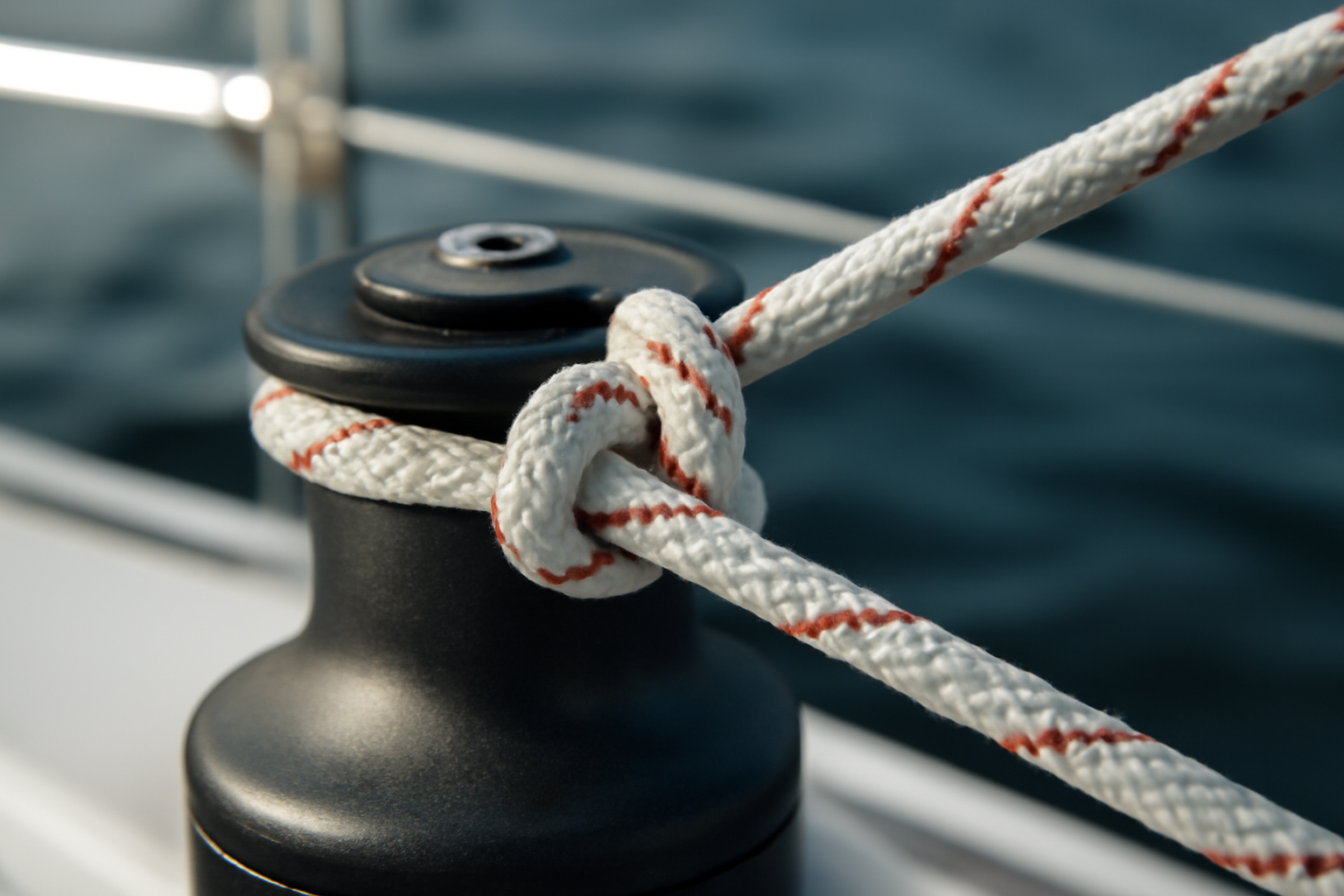
Every boater knows the feeling when it arrives. Your dock line has cinched itself into a stranglehold against the load, the cleat is buried under tension, and you face an impossible choice: release the load and watch something break, or cut through a perfectly serviceable rope. Working Gulf Coast moorings for two decades has put me in that exact bind more times than I like to admit, and the rolling hitch knot on a jammed line on a boat has gotten me—and plenty of clients—out of that trap without sacrificing good equipment. Most mariners overlook this knot entirely, and that’s a shame. I’m going to show you how it works and why it matters.
Twenty years tying off vessels, reinforcing pilings, and mending what weather and neglect broke between Pensacola and Corpus Christi teaches you lessons no online tutorial really captures. The rolling hitch won’t win any beauty contests. It’s not featured in beginner knot primers. But the moment you’re standing on a dock with a line about to snap and you know how to tie this correctly, you’ll grasp why commercial riggers and old-timer fishermen treat it like gospel. What it does is shift the strain from one overloaded or stuck line onto a fresh working line—and it grips hard enough to hold when you’ve executed it properly.
My goal is to give you something you can actually use, not just theoretical instructions. So we’re going to cover the real situations where this knot proves indispensable, walk through tying it correctly while there’s pressure on it, and talk through the errors I’ve witnessed that cause it to slip at exactly the wrong moment.
When to Use the Rolling Hitch on a Boat
The rolling hitch creates a secure bite that runs lengthwise along another line or spar, keeping its grip even under tension. That design makes it essential for several maritime predicaments that show up more regularly than most people realize.
Taking the Strain Off an Overtightened or Pressurized Mooring Line
This situation is the textbook application. During last summer’s tropical weather system, one of my regular clients had his 28-foot center console moored to my floating dock when a tidal surge rolled through. The bow line—a solid 1/2-inch three-strand nylon—had drawn up so hard against the cleat that you could hear it vibrating. The cleat itself was bending sideways under the pull. He couldn’t get enough slack to free the line safely, and he wasn’t keen on hacking through a quality rope. I grabbed a spare 20-foot dock line, tied a rolling hitch to that pressurized rope, and redirected the load to a nearby piling. In less than a minute, the original line relaxed enough to come free from the cleat without incident. Rope stayed intact, cleat stayed straight, problem solved.
That’s precisely what this knot does best. You employ it when you’ve got to shift the burden from one line to another without first releasing the pressure that’s holding everything in place.
When You’ll Actually Need This Knot
- Sailing: Moving tension away from a snagged sheet or halyard so you can clear a winch jam
- Setting anchor: Connecting a shock-absorbing line to your chain under existing pressure
- Towing operations: Fastening a backup tow attachment to a tow rope while it’s under load
- Pilings and mooring: Gripping a timber or post to manage temporary working strain
- Line rigging: Binding a fender or working line to a fitting or existing line when no cleat is available
In my view, the rolling hitch deserves the same automatic place in your working knowledge as a bowline or proper cleat hitch. You need to know it without hesitation. That’s only going to happen if you tie it repeatedly before you actually need it in an emergency, so make sure you practice this knot several times before you’re out on the water counting on it to work.
Step-by-Step: Tying the Rolling Hitch
Picture yourself on a dock with a pressurized 1/2-inch mooring line that won’t budge and a second length of rope ready to work with. The line you’re tying with (your working line) should match the diameter of the stuck line or be slightly thinner. From my experience, 1/2-inch double-braid nylon is what you want here—I’ll explain why in just a moment.
Choosing Rope That Won’t Betray You While You’re Working
When you’re setting a rolling hitch while there’s actual load pressing down, your working line has to grab without letting go and maintain its structure while you execute the knot—especially if you’re buying a few minutes of safety before your permanent solution takes hold. Good double-braid nylon rope provides the surface texture and structural reliability to make the knot dependable when things matter.
What performs
- Double-braid structure wraps around itself with solid contact—no slipping or gradual movement when weight is pulling
- Half-inch thickness resists crushing under real dock-line forces and stays handleable with a single grip while the load is present
- Twenty-foot working length provides room for protection wraps and enough free section to attach your relief line cleanly
What fails
- Nylon can stretch considerably under severe pressure, so in extreme situations the line may creep slightly before the rolling hitch fully takes over—you’re gaining time, not guaranteeing permanence
- Wet nylon becomes treacherous to handle, particularly if you’re hurrying through the tie in damp conditions; I’ve dried my palms on my shirt countless times to get the wraps tight
I once doubted whether a rolling hitch could actually hold when I rigged it on a mooring line that had twisted under a 40-knot squall—but the moment I saw it lock and transfer load cleanly, I stopped thinking of it as a backup and started thinking of it as part of my core toolkit. Grab the SEACHOICE Double-Braid Nylon Dock Line 1/2″ x 20′ (Model 40241) and keep it in your truck bed.
Frequently Asked Questions
Can a rolling hitch hold a mooring line under pressure?
Yes. I’ve used it to redirect load from an overtightened mooring line to a fresh one without releasing pressure first. During a tidal surge last summer, a 1/2-inch three-strand bow line was vibrating against a bent cleat. I tied a rolling hitch on a spare 20-foot dock line to a nearby piling, and the original line relaxed enough to come free in less than a minute.
What rope diameter should I use for a rolling hitch?
Match the diameter of the stuck line or use something slightly thinner. I use 1/2-inch double-braid nylon for rolling hitches because the double-braid structure wraps around itself with solid contact and resists crushing under real dock-line forces while staying handleable with a single grip.
Will nylon rope slip when wet under a rolling hitch?
Wet nylon becomes treacherous to handle, especially if you’re hurrying through the tie in damp conditions. I’ve dried my palms on my shirt countless times to get the wraps tight. Nylon can also stretch considerably under severe pressure, so the line may creep slightly before the rolling hitch fully takes over.
What length working line do I need for a rolling hitch?
Twenty feet provides enough length for protection wraps and a clean section to attach your relief line. I keep a SEACHOICE Double-Braid Nylon Dock Line 1/2″ x 20′ in my truck bed specifically for rolling hitches on mooring and dock situations.
Sources and further reading
About This Article

Written by Trent Hollis. Waterfront homeowner turned DIY obsessive. After two decades tinkering with my own dock, seawall, and boat lift on the Gulf Coast, I share everything I've learned about waterfront construction, boat lift maintenance, and coastal living projects. More about this site.
Scope and limits. Trent is a waterfront homeowner, not a licensed marine contractor. Structural, electrical, and lift work should go to a licensed marine contractor, and most in-water work needs a permit before you start.
Verify this against a primary source
Specifics change, and your situation may differ from the one described here. These are the authorities worth checking directly:
- ABYC — marine electrical and construction standards
- U.S. Army Corps of Engineers — permitting for work in navigable waters
- NOAA Tides & Currents — tidal range and water level data for your site