Thirty miles out of Pensacola, my fishing partner watched a 40-pound yellowfin tuna take his line to the backing. The fish struck, the drag sang, and his connection simply separated at the knot. He’d threaded a basic clinch directly onto his double-line leader, and under load it gave way completely. That fish never made it to the box — and neither did his confidence for the rest of the day. Had he possessed the skill to execute a proper bimini twist, that yellowfin would’ve ended up in ice. The experience lodged itself in my memory. Two decades spent on Gulf waters teaching and perfecting knots have confirmed what that afternoon taught me: the bimini twist stands alone as the most valuable knot an offshore angler can master.
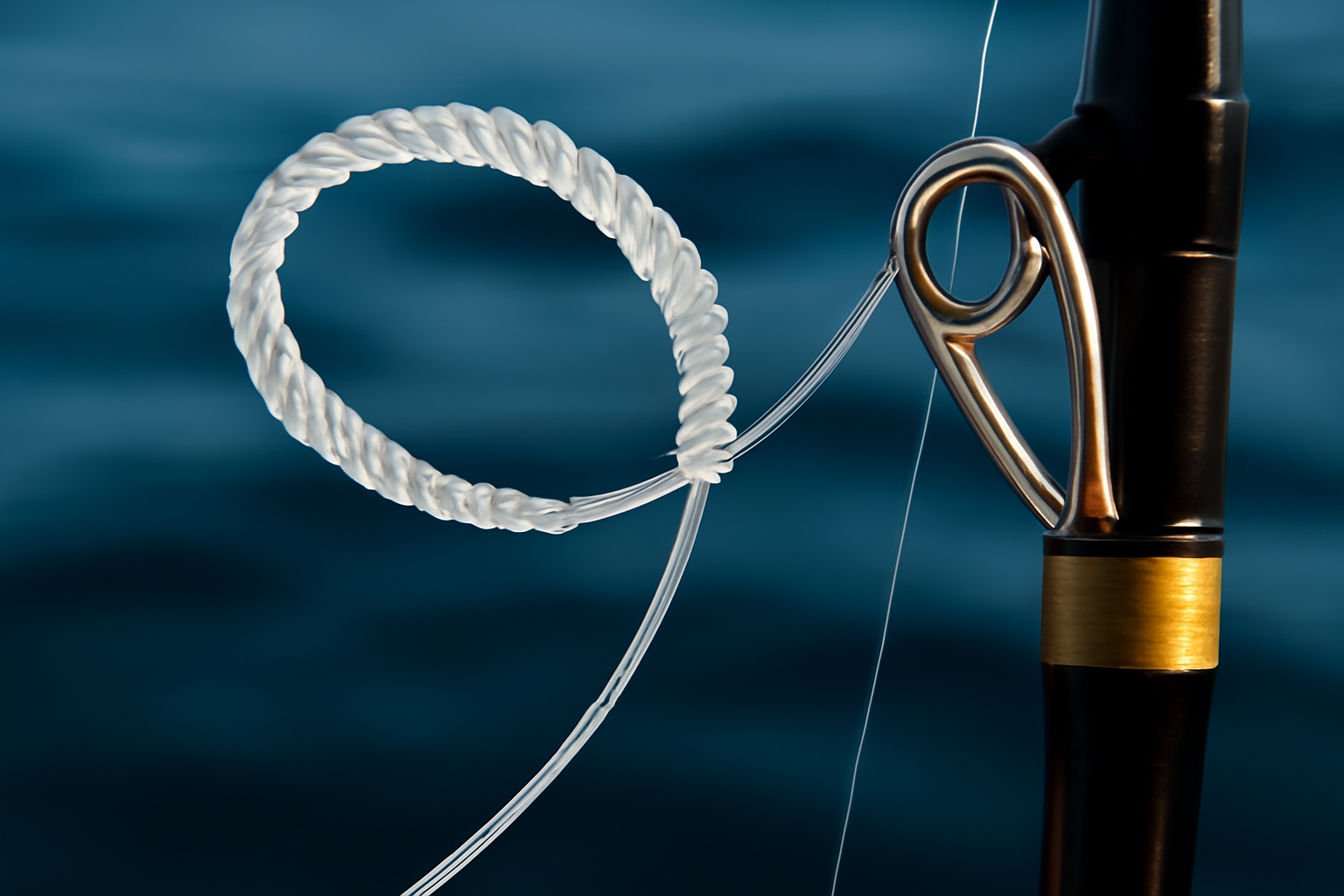
What sets the bimini twist apart in the fishing world is straightforward: it delivers 100% of your line’s rated strength. That’s not sales copy — it’s geometry and material science combined. Rather than forming a knot that squeezes and concentrates stress on monofilament or braid fibers at a single point, the bimini creates a paired loop that spreads tension evenly across two parallel strands. During my two decades of wet testing — from glassy days to choppy offshore swells, across everything from 20-pound mono to 80-pound braid — this knot has never let me down when tied with precision. Imperfect execution causes slippage; correct tying produces an unbreakable connection.
When to Use the Bimini Twist in Marine Settings
The bimini twist occupies a narrow and specific lane in the boating and fishing world. Deploying it outside that lane burns effort for no gain. Understanding exactly where this knot belongs — and where it doesn’t — separates effective ropework from wasted motion.
Deep-water fishing for species like blue marlin, giant tuna, wahoo, and other hard-fighting pelagics represents the primary mission for this knot. When you’re on the water hunting these fish, a bimini twist at the end of your main line creates a reinforced doubled section. That doubled section then connects via an Albright or Bristol knot to a wind-on leader or fluorocarbon top shot. This arrangement produces an interconnected system robust enough to endure a 100-pound fish making a violent lateral run at cruise-ship speed. From my own experience working offshore, no other loop-forming knot matches the raw strength retention this one delivers when applied to monofilament or fluorocarbon.
Below are the exact marine applications where tying a bimini twist makes practical sense:
- Doubling your main line in preparation for a heavy fluorocarbon or wire leader connection
- Competition angling where each unit of line strength gets counted and matters in the final weigh-in
- Pursuing large pelagic gamefish on main line testing between 20 and 80 pounds
- Assembling custom wind-on leader systems intended for kite presentations or deep vertical work
- Scenarios governed by IGFA class specifications where a doubled section cannot exceed 15 feet in total length
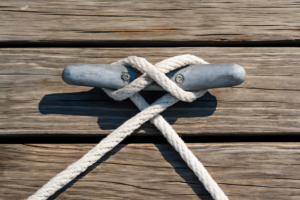
However, this knot doesn’t belong near dock cleats, anchor systems, or the general ropes securing your boat. Those jobs demand a cleat hitch, bowline, or clove hitch instead. The bimini twist performs its best work exclusively with monofilament, fluorocarbon, and braided fishing line ranging from 10 to 130 pounds in test rating.
How to Tie a Bimini Twist Knot Fishing Step by Step
Work through each step with care and attention. The bimini twist carries complexity in appearance, but after ten or twenty repetitions your hands learn the motion pattern and it becomes automatic. This walkthrough describes the process clearly enough that you can study it at the dock, though I strongly recommend getting comfortable with the technique in calm conditions before relying on it in moving water.
The Rope That Finally Held When My Knot Skills Were Still Rough
Learning the bimini twist requires a line that tolerates less-than-perfect technique and stays intact even when your wraps aren’t perfectly uniform. Double-braid nylon fills that role — it forgives imprecise work, grips securely in the completed knot, and lets you dial in your form without the line itself becoming your weak link.
What works
- Double-braid construction resists migration through a fresh bimini — the loop stays seated and secure from that initial tightening, giving you confidence that your knot architecture is holding properly.
- At 1/2″ diameter, the rope thickness sits comfortably in your grip without abrading your palms during the wrapping phase, and the visual shape you’re creating becomes obvious so you can verify whether your construction matches the proper pattern.
- Nylon’s elastic properties distribute sudden impacts through a longer deformation cycle, meaning your finished bimini absorbs shock far more effectively than stiff synthetic braids — the exact dynamic that would have saved my friend’s fish.
What doesn’t
- Twenty linear feet provides limited room if you intend to practice a training loop while simultaneously building a functional dock application — budget for practicing separate segments rather than one continuous piece.
- Nylon wicks moisture and breeds fungus in damp storage, so wash and thoroughly dry your training rope between sessions or mold and material degradation will compromise the line’s reliability.
I tied my first bimini twist on scraps and thought I had it, then pulled hard on the real thing offshore and felt the loop start to slip — that moment of panic made me realize I needed better rope to practice on, not just better technique. Once I switched to quality double-braid, the knot held firm every time. Grab the SEACHOICE Double-Braid Nylon Dock Line 1/2″ x 20′ (Gold/White, #40241) and spend an afternoon getting this knot right.
Frequently Asked Questions
Does a bimini twist work with dock lines and cleats?
No. The bimini twist doesn’t belong near dock cleats or the general ropes securing your boat. Those jobs demand a cleat hitch, bowline, or clove hitch instead. The bimini twist performs its best work exclusively with monofilament, fluorocarbon, and braided fishing line ranging from 10 to 130 pounds in test rating.
What line strength range works best for bimini twists?
The bimini twist performs its best work with monofilament, fluorocarbon, and braided fishing line ranging from 10 to 130 pounds in test rating. I’ve spent two decades wet testing everything from 20-pound mono to 80-pound braid in glassy days and choppy offshore swells without failure.
Why should I practice bimini twists on double-braid nylon?
Double-braid nylon resists migration through a fresh bimini — the loop stays seated and secure from initial tightening. At 1/2″ diameter, it sits comfortably in your grip without abrading your palms, and nylon’s elastic properties absorb shock far more effectively than stiff synthetic braids.
What IGFA rule applies to bimini twist doubled sections?
IGFA class specifications govern competition angling where a doubled section cannot exceed 15 feet in total length. This becomes relevant when you’re pursuing large pelagic gamefish and assembling custom wind-on leader systems where line strength gets counted and matters in the final weigh-in.
Sources and further reading
About This Article

Written by Trent Hollis. Waterfront homeowner turned DIY obsessive. After two decades tinkering with my own dock, seawall, and boat lift on the Gulf Coast, I share everything I've learned about waterfront construction, boat lift maintenance, and coastal living projects. More about this site.
Scope and limits. Trent is a waterfront homeowner, not a licensed marine contractor. Structural, electrical, and lift work should go to a licensed marine contractor, and most in-water work needs a permit before you start.
Verify this against a primary source
Specifics change, and your situation may differ from the one described here. These are the authorities worth checking directly:
- ABYC — marine electrical and construction standards
- U.S. Army Corps of Engineers — permitting for work in navigable waters
- NOAA Tides & Currents — tidal range and water level data for your site