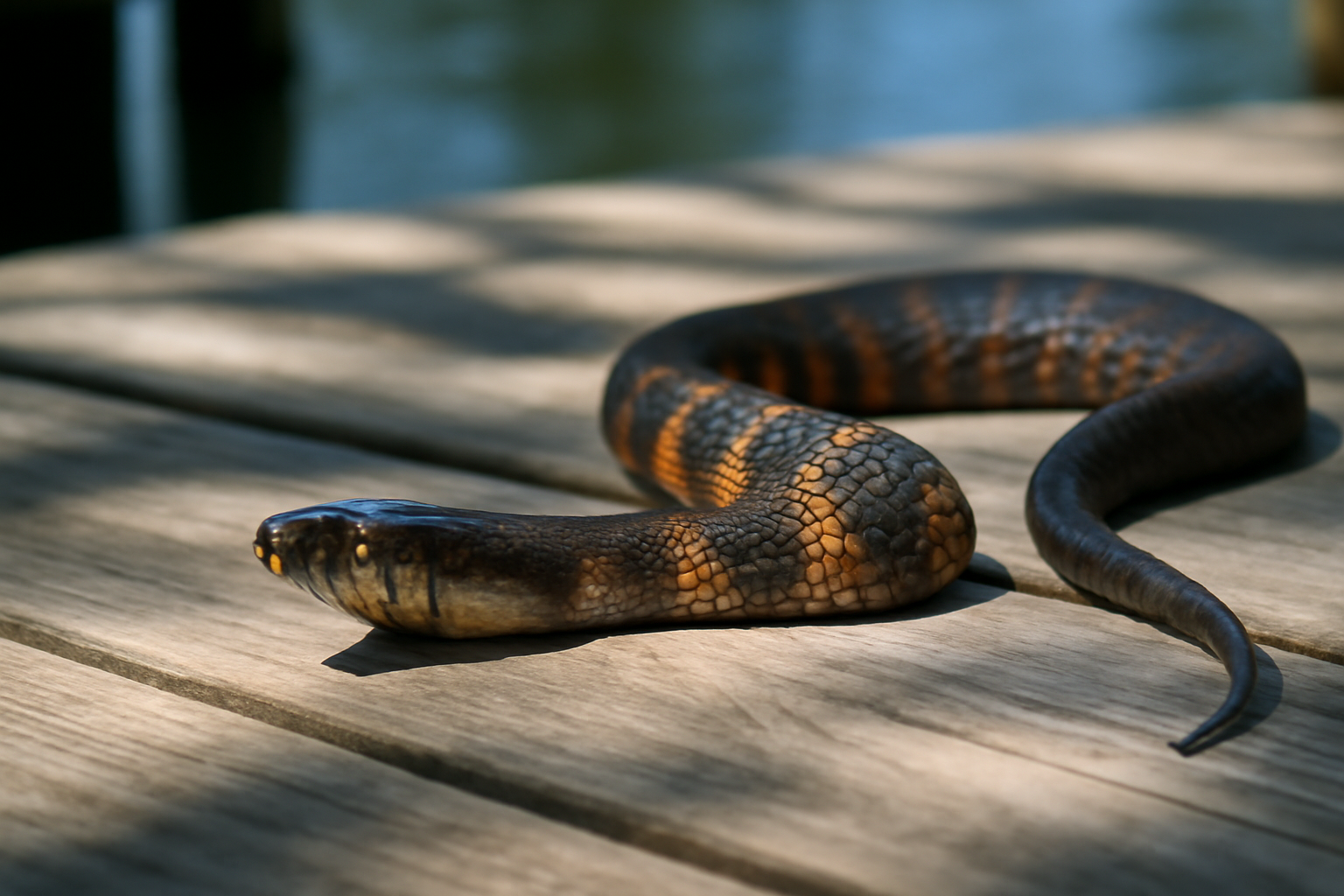
Twenty years into marine construction on the Gulf, and one claim I hear constantly proves itself backwards: most people think snake problems at docks are something you can solve with panic or a garden hose. Neither works. What actually happens is you either trap yourself indoors avoiding your own property, or you misidentify a harmless species and do something you regret—legally or physically. Both outcomes are avoidable once you know what you’re looking at and why it showed up in the first place.
About eighteen months back, a woman with a place on Pensacola Bay called asking me to come evaluate what she described as “definitely a water moccasin” sheltering under her dock storage box. When I got there, it was a banded water snake—useful for keeping down frogs and small fish, completely benign unless cornered. She’d stopped using her dock for the better part of a month because of that misidentification. Situations like hers crop up regularly, which is precisely why I’ve written this out.
Knowing which species inhabit your waterfront, grasping what draws them there, and implementing changes that make your dock less appealing—that’s where actual safety and peace of mind come from. Read through the details below.
| Species | Head Shape | Length | Coloring | Threat Level |
|---|---|---|---|---|
| Cottonmouth (Water Moccasin) | Triangular | 24 to 48 inches | Dark browns and olives with faint crossbands | Venomous—seek emergency care if bitten |
| Banded Water Snake | Rounded | Not specified | Dark with sharp, organized striping | Harmless—feeds on small fish and tadpoles |
| Brown Water Snake | Not specified | Not specified | Not specified | Harmless—nongame protected |
| Eastern Diamondback Rattlesnake | Not specified | Not specified | Not specified | Venomous—seek emergency care if bitten |
| Copperhead | Not specified | Not specified | Not specified | Venomous—seek emergency care if bitten |
Gulf Coast Snake Species You’ll Encounter at the Dock
The coastline stretching from the Florida Panhandle westward through Alabama, Mississippi, Louisiana, and into Texas encompasses diverse wetland and marine settings, yet the snakes that turn up around docks remain surprisingly similar across that entire range. Being able to spot them correctly is your first and most important tool.
The Dangerous Ones — Memorize These
Everyone gets anxious about the cottonmouth (Agkistrodon piscivorus)—also known as the water moccasin—and with good reason. This semi-aquatic pit viper is genuinely hazardous when threatened, carries a heavy, muscular frame, and typically measures somewhere between 24 and 48 inches in length. The white mouth lining, visible when the snake hisses and displays defensively, is the giveaway. The head tapers to a distinct triangle shape, and coloring tends toward dark browns and olives with faint crossbands. From spring through fall, I encounter these most frequently around piling bases, rocky shorelines, and vegetation-choked shallows.
The eastern diamondback rattlesnake may surface near docks in forested coastal zones, though it gravitates less toward water than the cottonmouth does. The copperhead likewise frequents waterfront property, particularly in wooded regions spanning Mississippi and Alabama. Maintain your distance from all three species. A bite from any of them demands immediate emergency care—never try to capture or move one yourself.
The Safe Ones — They Deserve to Stay
The banded water snake (Nerodia fasciata) tops the list of species that people routinely confuse with cottonmouths at Gulf docks. It builds a stout frame, displays dark coloration, and navigates water with obvious skill—characteristics that trigger false alarms. The crucial difference: the head remains rounded rather than angular, and striping along the body appears sharper and more organized. My observation over the years is these animals subsist on small fish and tadpoles, creating no hazard unless you attempt to grab one—which results in a defensive bite and musky odor, neither of which is pleasant but neither of which is venomous.
You’ll encounter brown water snakes, diamondback water snakes scattered through coastal Louisiana and Texas stretches, plus black racers prowling through dock lumber and pilings. In Florida specifically, the Florida green water snake regularly generates alarm despite total harmlessness. State wildlife regulations across the Gulf region classify these species as nongame animals with legal protections. Killing them isn’t just unnecessary—you face potential monetary penalties for doing so.
Why Your Dock Becomes a Snake Magnet
If you understand the mechanics of what attracts snakes to docks, you unlock the actual way to deter them. Snakes aren’t targeting your property out of spite or aggression. They arrive because your dock furnishes three essentials: security, thermal benefit, and a reliable food supply.
Dock architecture creates environments snakes find irresistible. Spaces between deck planks absorb solar warmth during midday. The shadowed zone underneath floating platform sections stays cool—ideal daytime refuge. Piling bases develop cavities and caverns at the water’s edge. Storage containers, rope holders, life rings—anything hollow or dark mimics the burrow systems snakes use naturally. Your dock transforms into a premium shelter the moment construction is finished.
The nutrition component matters immensely. Frog populations anywhere on your waterfront represent an open buffet for snakes. Pest rodents—mice chewing into storage compartments, rats nesting in boathouse corners—draw snakes hunting for larger meals. Songbirds establishing nests in dock framework also factor in. Every time I’ve cleared out old nesting debris from overhead rafters, I’ve found water snakes coiled underneath searching for nestlings. Tackle the prey species and snake visits decline noticeably.
Keeping Snakes Away From Your Gulf Coast Dock: Solutions That Deliver Results
Two decades in this field has hammered home a single lesson: no single product eliminates snakes. A genuine snake-reduction program blends structural improvements, physical barriers, and steady upkeep. Anyone pitching a one-product cure is exaggerating.
Step 1 — Delete Snake Refuge Areas
Conduct a thorough assessment of your entire dock setup. Scan for fissures exceeding half an inch between deck planks, hollow sections where pilings meet the water, and accumulated items piled on or beneath your dock. Composite decking with narrower spacing performs better here—it’s part of why I’ve started steering clients away from traditional pressure-treated lumber and toward composites for snake-wary properties. Use marine-grade sealant or trim to close the gaps surrounding dock storage units.
Clear away brush, scrap boards, discarded flotation gear, and bundled ropes from ground level in the vicinity of your dock entry. These aren’t simply eyesores; they provide refuge. Maintain visibility and minimal obstacles underneath and immediately bordering the dock structure. In my experience, this single intervention cuts snake encounters in half on average.
Step 2 — Minimize Prey Populations
Addressing rodent activity in dock-adjacent storage represents essential prevention work. Stock all provisions and baits in rigid, sealable containers, never open receptacles or cardboard. Perform a pest assessment twice yearly—look for evidence of gnawing, fecal droppings, or constructed nests. When you spot signs, deploy mechanical traps inside covered stations and seal all openings where rodents enter. I learned this painfully on my own property in Escambia County: I overlooked a mouse infestation in my storage box throughout one summer, and the next year produced a cottonmouth underneath the platform. That preventable situation cost me a $200 pest service visit.
Reduce nighttime dock illumination where feasible, or convert to warm-color LED fixtures. Bright lights bring insects, insects pull in frogs and small aquatic life, and the chain completes with snakes. This approach also safeguards sea turtle hatchlings along Florida shores and aligns with Gulf state coastal protection rules—solving two separate issues at one time.
The Railing Guard System That Stops Snakes From Warming Up on My Dock
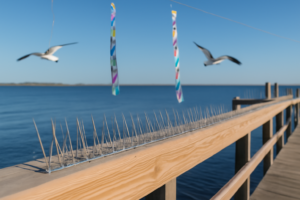
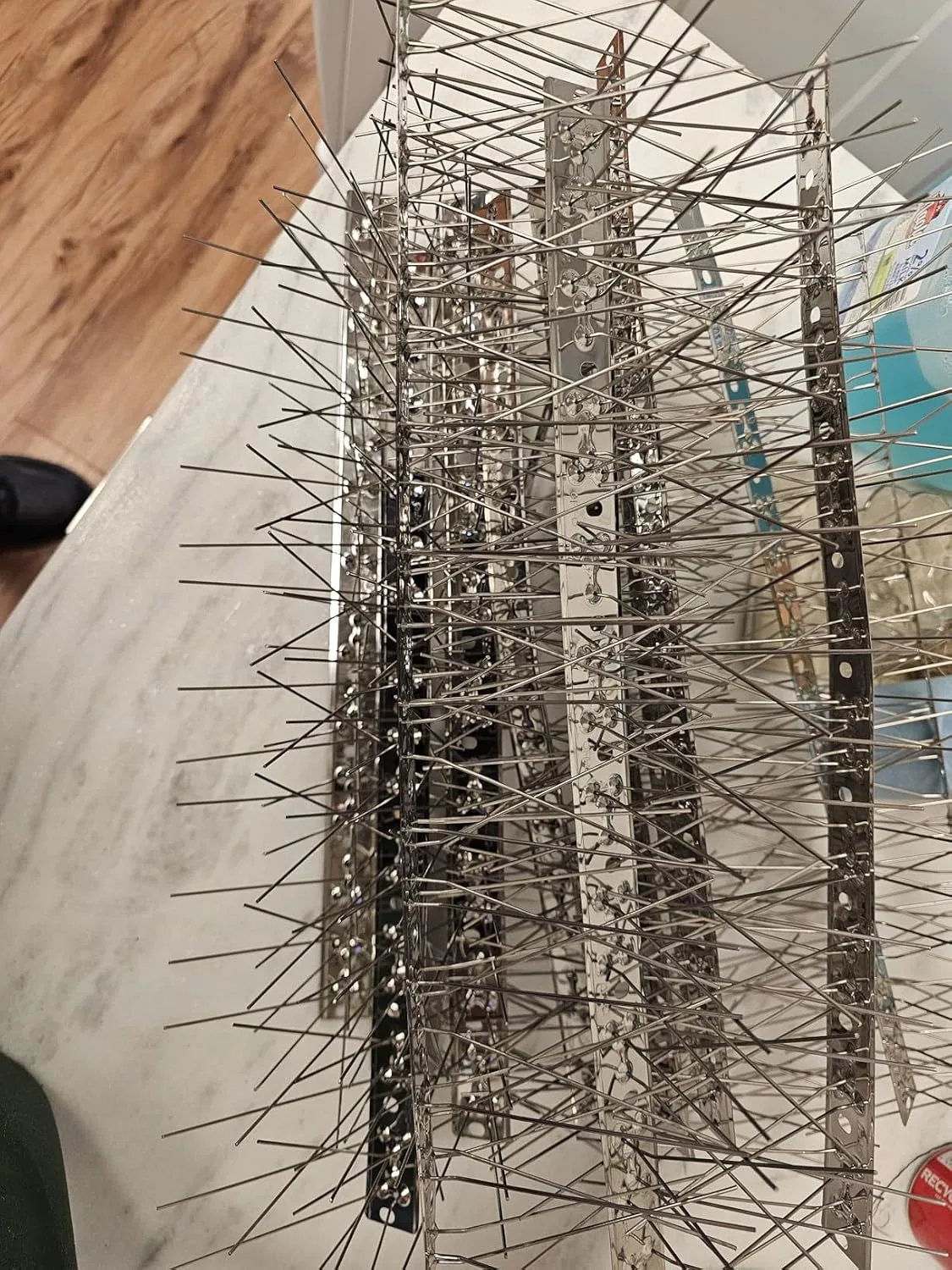
Snakes gravitate toward dock railings for their morning sun exposure, and once they find one they use, they return repeatedly. I wanted a deterrent that would push them away without injuring them or compromising my waterfront aesthetic.
Where it succeeds
- 316 stainless steel resists salt-air degradation and persistent dock moisture—I’ve run the same installation through two seasons with zero corrosion problems.
- The spacing prevents snakes from settling into a comfortable sunning position while remaining wide enough to shed leaves and moisture rather than catching clutter or appearing overly defensive from indoors.
- Attaching to timber railings requires roughly 20 minutes of labor per segment and only basic hardware—no specialized equipment or contractor knowledge involved.
Where it falls short
- Measure your railings with precision before ordering—the 10.2-foot unit covers roughly four typical dock sections, which means most owners require two units to fully cover their railings.
- This works as a deterrent mechanism, not an absolute barrier; particularly motivated snakes may negotiate the gaps, though the uncomfortable experience usually redirects them to simpler hunting grounds.
I’ll admit I was skeptical the first time I installed spikes on my dock — part of me wondered if I was just wasting money on a gimmick — but within a week, the basking traffic dropped by about 80 percent. OFFO Bird Spikes with Stainless Steel Base — 10.2-foot kit won me over.
Frequently Asked Questions
How do I tell a water moccasin from a banded water snake?
A cottonmouth has a triangular head shape and a white mouth lining visible when it hisses defensively. A banded water snake has a rounded head and sharper, more organized striping along its body. The banded water snake is harmless—it feeds on small fish and tadpoles and only bites if grabbed.
What size are Gulf Coast cottonmouths typically?
Cottonmouths typically measure between 24 and 48 inches in length. They carry a heavy, muscular frame, display dark browns and olives with faint crossbands, and are most frequent around piling bases, rocky shorelines, and vegetation-choked shallows from spring through fall.
Can I legally kill snakes at my Gulf Coast dock?
No. State wildlife regulations across the Gulf region classify most dock snakes as nongame animals with legal protections. Killing them isn’t necessary and exposes you to potential monetary penalties for doing so.
How much do railing spikes reduce snake basking on docks?
Within a week of installing 316 stainless steel spikes on my dock railing, basking traffic dropped about 80 percent. The 10.2-foot kit covers roughly four typical dock sections, so most docks require two units for full coverage.
Sources and further reading
About This Article

Written by Trent Hollis. Waterfront homeowner turned DIY obsessive. After two decades tinkering with my own dock, seawall, and boat lift on the Gulf Coast, I share everything I've learned about waterfront construction, boat lift maintenance, and coastal living projects. More about this site.
Scope and limits. Trent is a waterfront homeowner, not a licensed marine contractor. Structural, electrical, and lift work should go to a licensed marine contractor, and most in-water work needs a permit before you start.
Verify this against a primary source
Specifics change, and your situation may differ from the one described here. These are the authorities worth checking directly:
- ABYC — marine electrical and construction standards
- U.S. Army Corps of Engineers — permitting for work in navigable waters
- NOAA Tides & Currents — tidal range and water level data for your site