Galvanic corrosion from mixed metal fasteners can destroy your deterrent system in months — but bird management failure happens faster if you don’t understand what you’re actually fighting. Over twenty years building and maintaining Gulf Coast docks, I’ve watched property owners chase birds with every wrong tool in the shed: poison, air rifles, adhesive traps that maim wings. Those approaches don’t just fail. Under the Migratory Bird Treaty Act, they can trigger federal penalties north of $15,000 per incident.
Here’s what most dock owners never hear: the birds themselves aren’t your real obstacle. Your dock surface is. Eliminate comfortable landing zones, and birds depart on their own — no nets, no noise, no cruelty. I pieced together this strategy during my first decade watching clients dump money on fake predators and reflective strips that stopped working within days. This walkthrough covers the methods I’ve personally deployed, tested in salt spray and summer heat, and relied on for years.
Why Birds Love Docks (And Why That Makes Them Hard to Deter)
Start by recognizing why your dock attracts birds in the first place. Docks provide three irresistible features: elevation above ground level, an open view for scanning threats, and proximity to water-based food sources. Cormorants, pelicans, gulls, and grackles aren’t landing randomly. They’re making a deliberate biological calculation. This is precisely why plastic owls and rotating pinwheels collapse as deterrents — birds recognize within days that the “threat” poses zero actual risk. I’ve personally removed fake owls being used as landing perches by the very species they were meant to repel.
Then there’s the habituation factor, which most people underestimate. A single cormorant returning to your piling for three consecutive seasons presents a vastly different management challenge than one spotted yesterday. This is why I consistently advise dock owners: respond immediately and maintain steady pressure. A two-week lag between first sighting and deterrent installation can escalate a minor intrusion into an entrenched colony — which means exponentially more work and expense down the line.
The biology, though, cuts both directions. Birds cannot function comfortably on surfaces lacking a stable, flat perch. Strip away that critical feature, and your dock becomes undesirable. That single principle anchors every humane, effective deterrent strategy I’ve ever installed.
Physical Deterrents: The Foundation of Every Successful Bird Management Plan
Any serious dock bird management effort rests on physical deterrents. Unlike electronic sounders or visual scarecrows, physical barriers operate continuously, demand virtually zero upkeep, and work whether birds are fooled or not. They simply make perching painful or impossible. From 20-foot residential slips through 400-foot commercial installations, the foundational principles stay consistent.
Bird Spikes: The Workhorse Solution From Two Decades of Work
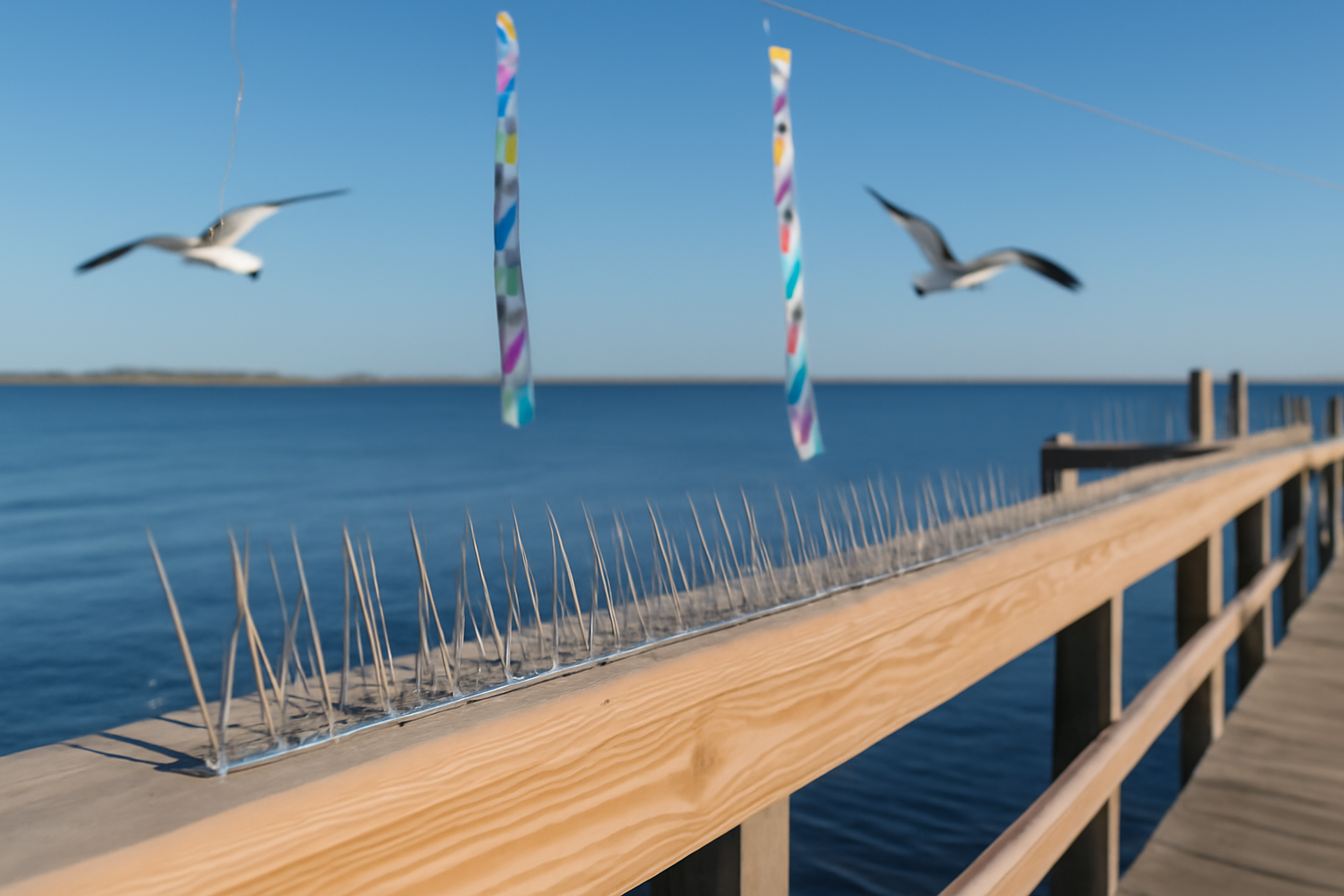
Stainless steel bird spikes represent the single most economical physical option for dock railings, piling crowns, and horizontal surfaces. When I first installed them covering my Pensacola boat lift‘s top rail — roughly 12 linear feet — cormorants stopped landing entirely within 48 hours. The essential requirement: stainless steel construction throughout. I learned this lesson through failure when I specified plastic-base spikes on a saltwater installation outside Biloxi. Within eight months, salt exposure and UV radiation had weakened the base material until brittleness set in. A minor weather event snapped three sections clean away. Lesson absorbed permanently.
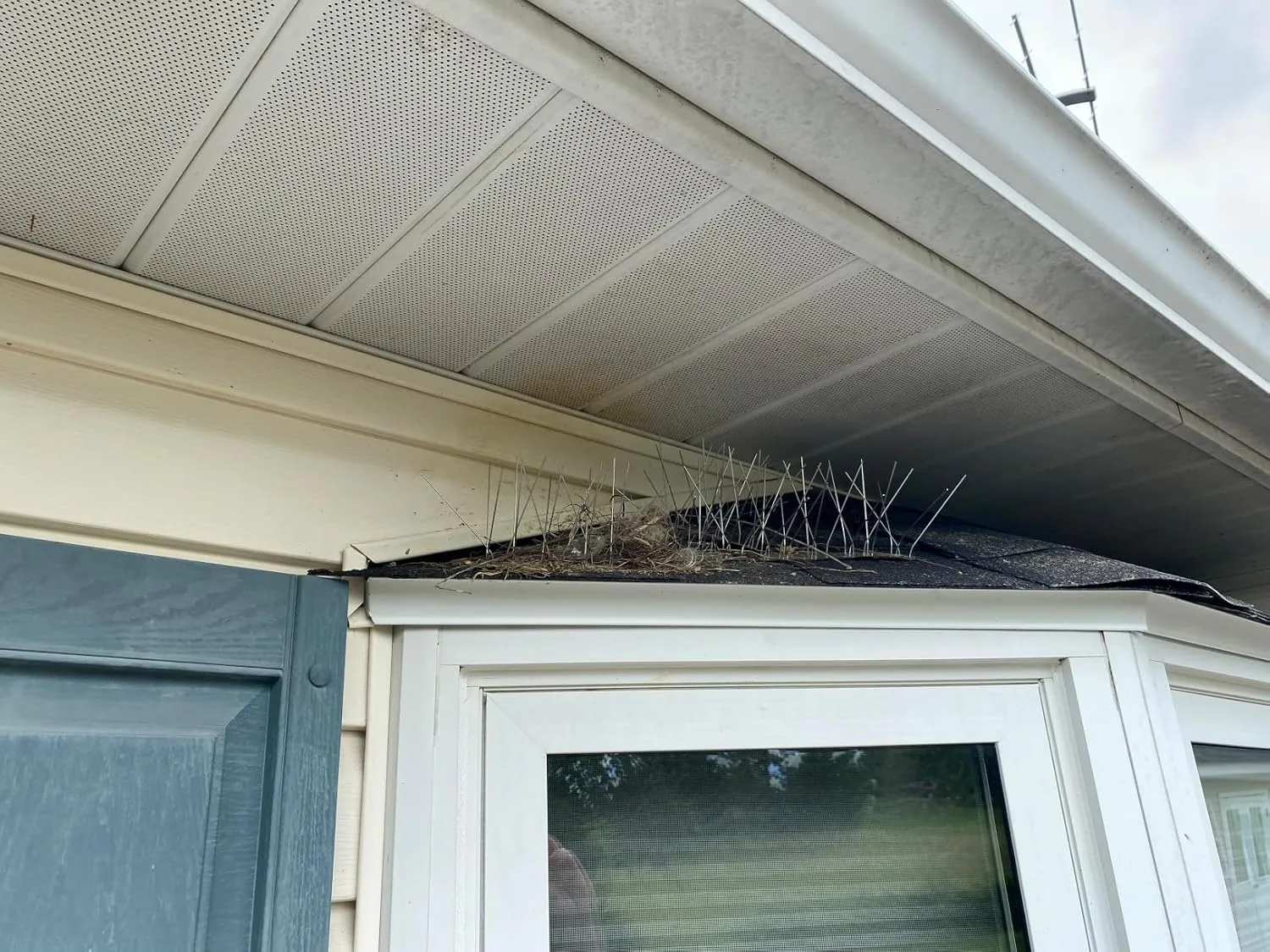
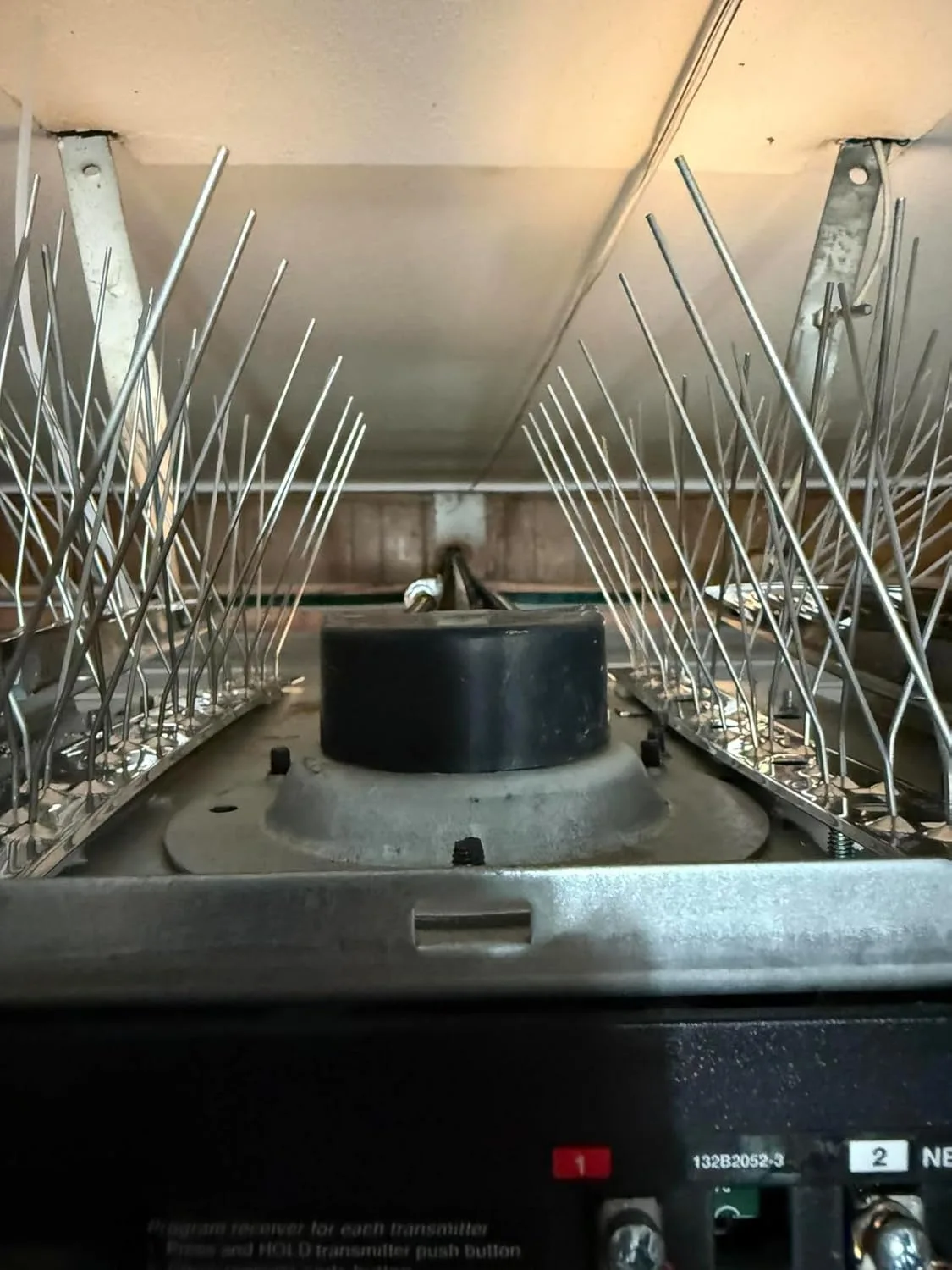
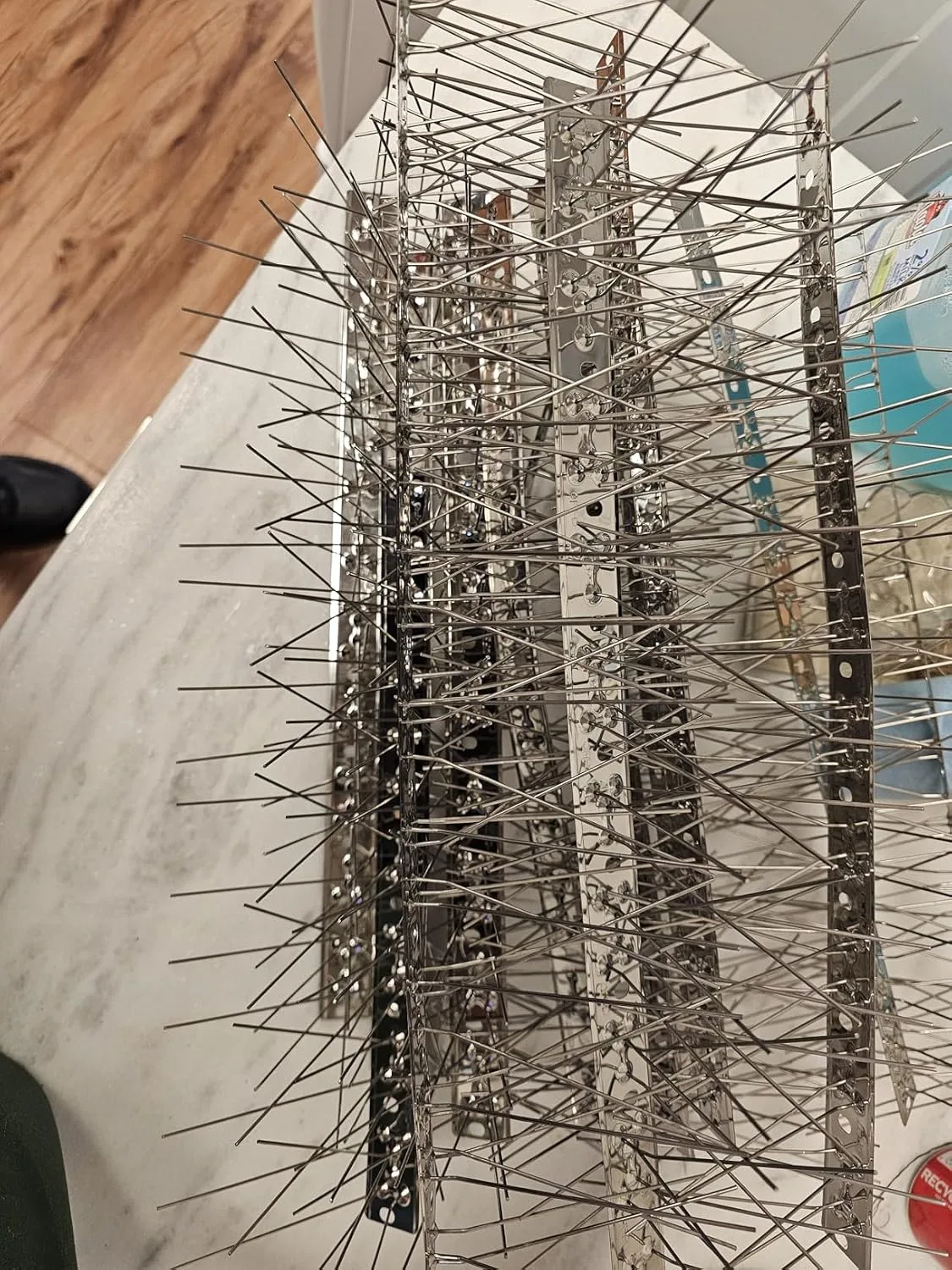
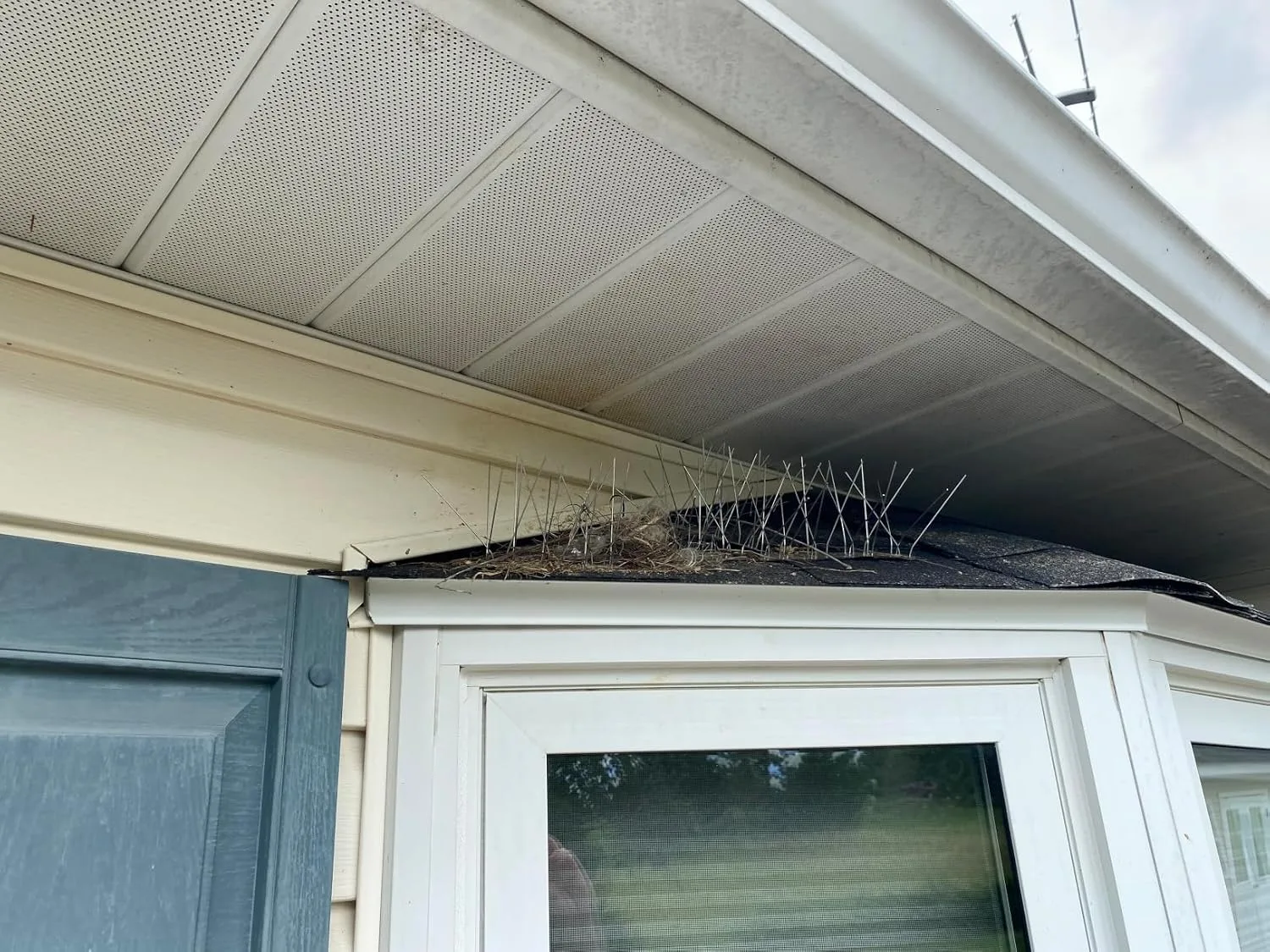
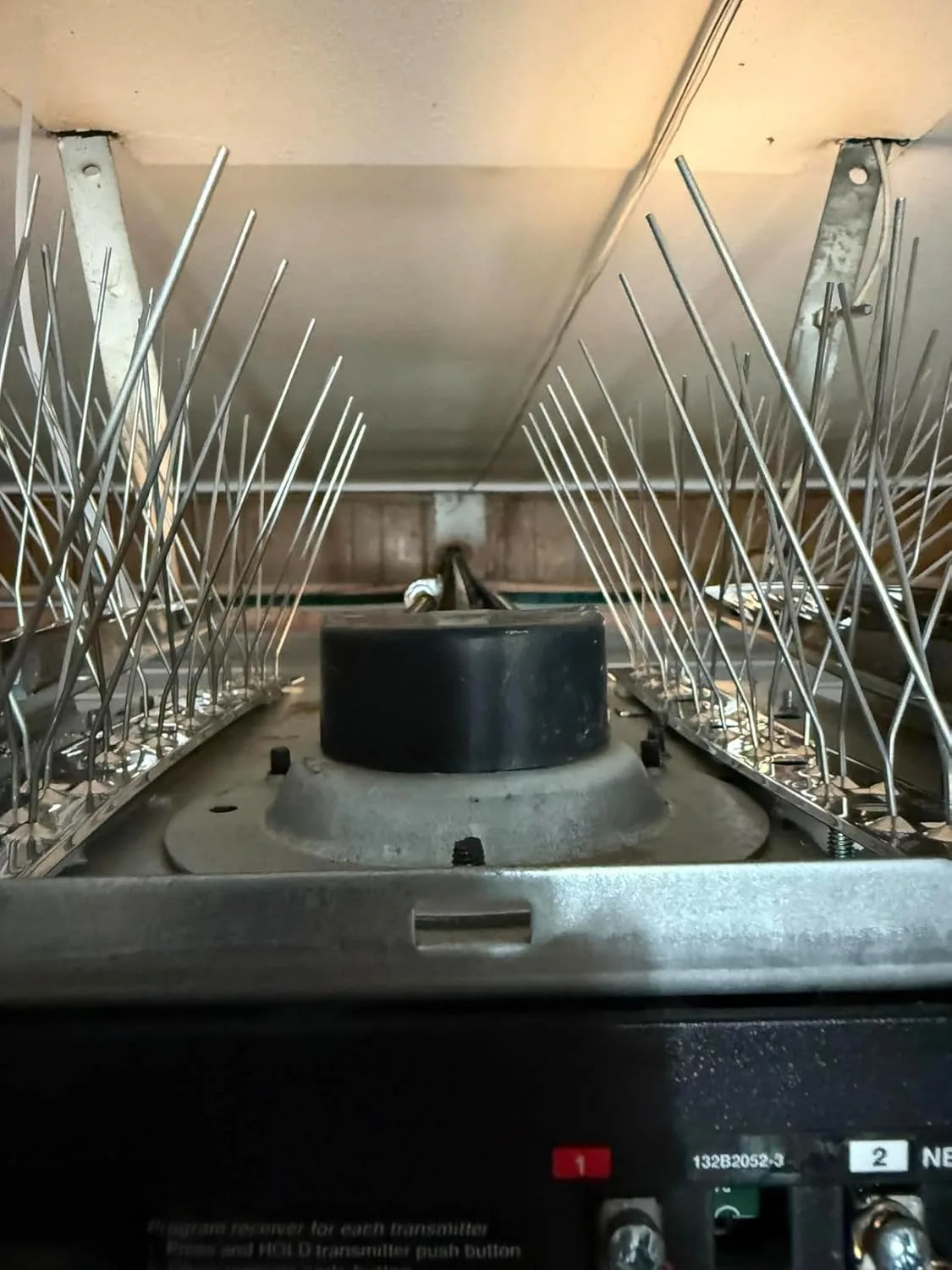
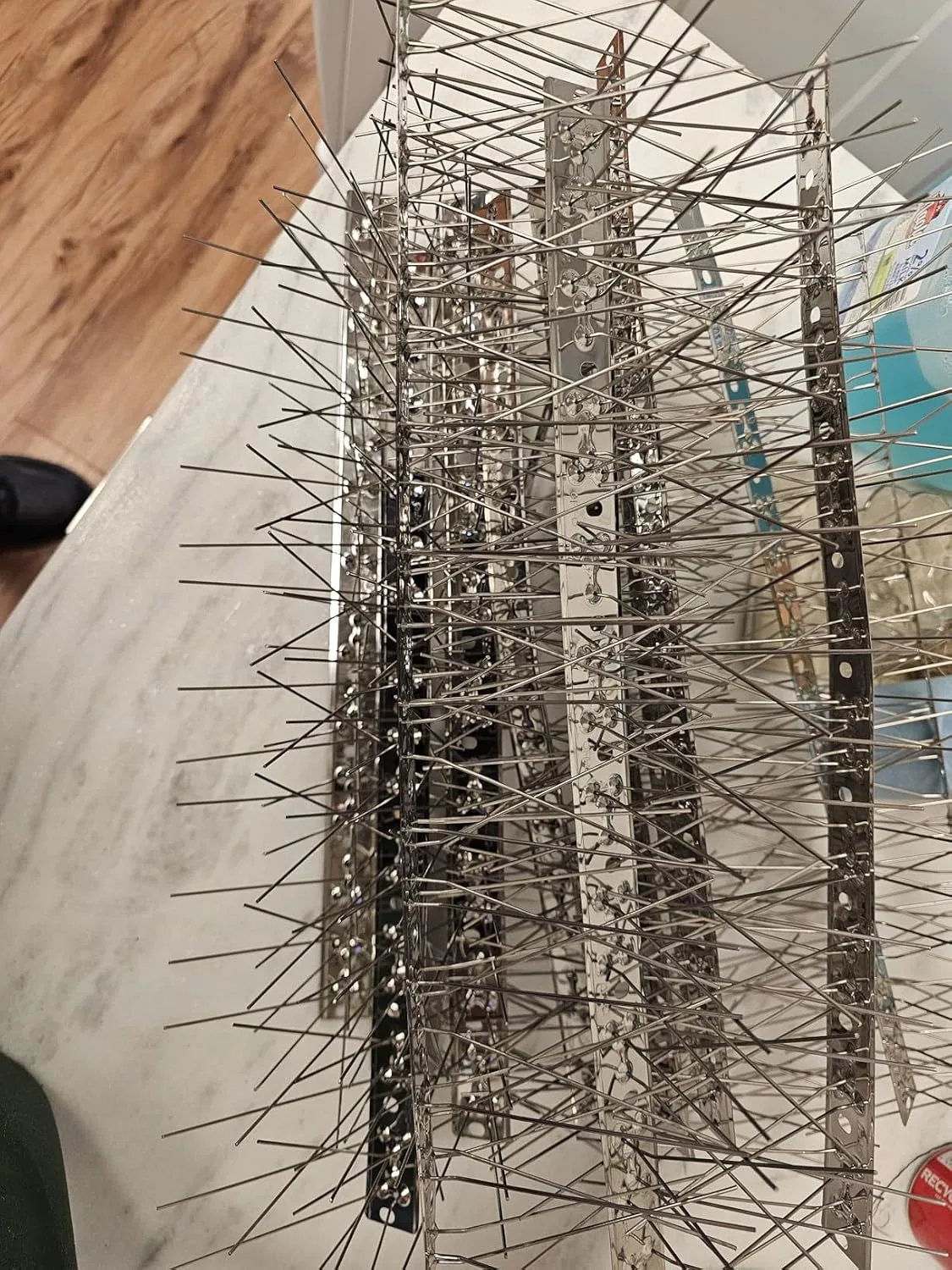
For dock applications specifically, I now recommend the OFFO Bird Spikes with Stainless Steel Base — 10.2-foot kit. The stainless base is the critical detail here. It won’t corrode in a salt environment, and it won’t crack under direct summer sun. The arrow-spike pattern provides coverage for small birds like grackles and starlings as well as larger nuisance birds like crows. I’ve tested these against Gulf Coast conditions — salt spray, 95°F heat indices, occasional storm surge splash — and they hold up. At roughly $20–$25 for 10.2 feet of coverage, the cost-per-foot is genuinely hard to beat for a permanent solution.
Mounting spike strips to dock railings demands roughly 15 minutes per 10 feet of coverage. Marine adhesive — 3M 5200 is my standard — or corrosion-resistant fasteners work equally well if attaching to wooden decking. Composite surfaces and vinyl-capped railings require adhesive application exclusively; screwing through creates cracking risks. One critical detail: your spike placement cannot obstruct U.S. Coast Guard-mandated navigation lighting or safety equipment. Plan positioning around these requirements.
Budget-Conscious Installation? The 3.4-Foot Alternative Starts Here
If you’re not sure how many linear feet you actually need, or you want to test placement before committing, the OFFO Bird Spikes 3.4-foot kit is a smart starting point. Same stainless base construction, same spike pattern, just a shorter strip that’s easier to handle and reposition. I’ve used these on clients’ piling caps — particularly the flat wooden caps on treated timber pilings — where you only need spot coverage rather than a long run. At around $10–$12 per kit, you can grab two or three and figure out exactly where your problem zones are before buying in bulk.
Monofilament Systems and Additional Physical Barriers
Bird spikes excel on narrow ledges, rail caps, and confined horizontal perches. They fall short for expansive flat decking or open boat slips where birds land on the dock plane itself rather than discrete perches. Monofilament grid installations fill this gap. Installation principle: suspend 30–50 pound monofilament in gridded pattern, maintaining 6–8 inch clearance above landing surfaces. Birds contact the line while attempting descent, perceive an obstacle, and abort approach. They sustain zero injury or distress — just unexpected resistance.
A Panama City client engaged my services last spring for his covered boat slip — 12-by-24-foot interior space completely claimed by pelicans. We deployed monofilament grid using stainless eyebolts spaced at 18-inch intervals along overhead framing members. Total materials investment: under $60. Pelicans vacated within seven days, relocating to an adjacent uncovered dock. The client still sends me pictures of his pristine slip interior. The grid remains virtually invisible from normal viewing distances, protecting dock aesthetics.
Piling protection extends to conical or spike-crowned piling caps — a second physical strategy preventing flat landing surfaces on piling heads. These caps range $8–$15 each depending on piling diameter (Gulf Coast standard pilings typically measure 8–12 inches across). Combined spike strips on railings plus caps on piling heads address the two dominant bird landing zones across most residential dock configurations.
Audio and Visual Deterrents: Realistic Expectations and Limitations
I owe you straight talk here — many online resources oversell these categories. Visual deterrents including reflective tape, predator effigies, and balloon decoys deliver temporary suppression spanning 5–14 days maximum. Beyond that window, birds adapt and effectiveness evaporates. I discourage building comprehensive bird control around these tools alone. That said, they serve legitimate supplementary functions in targeted situations.
Flash tape suspended across boat lifts can discourage preliminary site surveys when birds are evaluating roost candidates. Motion-activated spray systems perform adequately on smaller installations where complete coverage stays feasible — I’ve documented reasonable results on residential fingers under 30 feet. Ultrasonic emitters, by contrast, consistently underperform in exposed outdoor conditions. Acoustic energy dissipates too rapidly to establish reliable deterrent zones in open air. These represent poor spending decisions.
Audio deterrence gains traction exclusively within enclosed covered slips featuring three walls and minimal ceiling heights — essentially boathouse conditions where sound rebounds rather than dispersing. In such confined spaces, sustained noise genuinely discourages bird occupancy. Outside these exact parameters, I suggest limiting audio device expenditure to $15–$20 maximum as a supporting tool, never as primary defense. My standing recommendation therefore prioritizes physical systems first, deploying audio or visual enhancements selectively in specific zones only.
Regulatory and Ecological Safeguards You Must Understand
This section carries more weight than dock owners typically recognize. The Migratory Bird Treaty Act — originally enacted 1918, subsequently revised multiple times — affords federal protection to over 1,000 species. This encompasses virtually every bird species you’ll encounter on Gulf Coast docks: pelicans, cormorants, herons, egrets, raptors, and the majority of gull varieties. Injuring, killing, or destroying nests or eggs of any protected species constitutes federal violation. Period. Any deterrent method you deploy must cause no injury and remain purely passive.
Translation: no entangling adhesive surfaces (they damage plumage and cause suffering), no electrified shock apparatus marketed for lethal effect, zero pesticide applications. Stainless bird spikes, monofilament grids, and physical landing barriers that merely prevent perching remain fully compliant and lawful. Uncertain about a specific product? Search manufacturer documentation for MBTA compliance statements or contact your regional U.S. Fish and Wildlife Service office directly.
Also: your dock likely sits on navigable waterways — standard for Gulf Coast properties — triggering possible Army Corps of Engineers Section 10 permits or Clean Water Act Section 404 requirements for structural work. Installing deterrents on existing dock surfaces normally sidesteps permitting obligations, but constructing new structures or enclosures for bird management potentially requires authorization. Verify with your local Corps district office beforehand. The Mobile and Jacksonville Districts handle most Gulf Coast regions and typically respond promptly to preliminary inquiries.
My Step-by-Step Approach to Comprehensive Dock Bird Control
Following two decades in this field, here’s the sequential process I execute when deploying complete bird deterrent protection across residential docks. Most owners complete the process within a single weekend using $75–$200 in materials scaled to dock dimensions.
- Outfit all pilings with deterrent caps — Crown every exposed piling with a conical or spike-topped cap to eliminate the primary individual perch location.
- Affix spike strips across every rail surface — Select stainless steel strips with marine-grade adhesive installation. Extend coverage along the complete accessible length of every railing element.
- Configure monofilament grid above boat lift or slip area — Deploy 40 pound monofilament using stainless eyebolts. Maintain 6–8 inch elevation above all potential landing points.
- Deploy reflective tape in supplementary zones — Target openings that physical systems cannot address. Reposition monthly to counteract habituation progression.
- Monthly maintenance checks during breeding season — March through August represents peak nesting on the Gulf Coast. Inspect for adhesive separation, hardware corrosion, or renewed landing attempts.
Critical point: don’t postpone deterrent installation until active nesting begins. Once eggs or chicks occupy a nest, the MBTA prohibits disturbance until fledging completes. I witnessed this consequence in 2019 when a client delayed action — he endured an eleven-week cormorant occupation on his lift. Preemptive deterrent deployment before breeding season arrives remains legally and practically mandatory.
Situations Requiring Professional Wildlife Management
Substantial portions of bird deterrent work sit squarely in competent homeowner territory. Certain circumstances, however, warrant engaging licensed wildlife professionals instead of proceeding independently. When established populations — ten-plus birds with consistent roosting patterns — occupy your dock, amateur deterrent deployment may prove insufficient for breaking the cycle without expert-level intervention. Licensed wildlife control operators access specialized equipment and methodologies unavailable through retail channels.
Likewise, if you encounter an existing nest containing eggs or fledglings, pause all activity immediately. Never contact or disturb the nest under any circumstances. Consult your state wildlife agency or a licensed wildlife rehabilitator regarding lawful procedures. Accidental disturbance of protected nests carries legal consequences even without intentional harm.
Additionally, if your deterrent strategy demands structural modifications — building overhead framing for a monofilament canopy system, for instance — and you lack saltwater construction experience, engage a licensed marine builder. Incorrectly mounted hardware in saltwater environments experiences catastrophic failure modes. I’ve remediated multiple DIY projects where builders selected deck fasteners without galvanization or stainless specifications in direct salt contact. This creates genuine safety hazards extending beyond appearance.
Conclusion: The Humane, Lasting Approach to Dock Bird Control
Two decades managing Gulf Coast dock challenges has convinced me completely: the most effective method to keep birds off your dock without harming them demands consistency, proactive timing, and precision installation of physical systems. Scare tactics deteriorate. Chemical interventions risk catastrophic harm and criminal exposure. A thoroughly installed stainless spike arrangement along all railings, piling caps protecting every post, and monofilament coverage over your slip — this configuration delivers reliable, season-spanning protection requiring minimal maintenance.
Start with the OFFO Bird Spikes 10.2-foot kit for your main rail runs, grab the 3.4-foot kit for spot coverage on piling caps and tight areas, and spend one Saturday getting everything installed before nesting season hits. That’s a $30–$40 investment that will save you hundreds of dollars in dock cleaning and potential structural damage from bird waste — which is genuinely acidic enough to degrade treated lumber over time.
Birds aren’t adversaries. They’re simply following evolutionary directives. Your responsibility is rendering your dock an unattractive option — accomplished humanely, lawfully, and permanently. You’re fully capable of this.
Frequently Asked Questions
What bird spike kit should I buy for my dock railing?
I recommend the OFFO Bird Spikes with Stainless Steel Base in the 10.2-foot kit for main rail runs. Stainless steel construction is critical — it won’t corrode in salt environments or crack under Gulf Coast summer heat. Cost runs roughly $20–$25 for 10.2 feet of coverage, and cormorants stopped landing on my boat lift within 48 hours of installation.
How do I install monofilament grid over my boat slip?
Suspend 30–50 pound monofilament in a gridded pattern using stainless eyebolts spaced at 18-inch intervals along overhead framing members, maintaining 6–8 inch clearance above landing surfaces. Birds contact the line during approach and abort without injury. A Panama City client spent under $60 in materials on a 12-by-24-foot slip, and pelicans relocated within seven days.
Are ultrasonic bird deterrents worth buying for my dock?
No. Ultrasonic emitters consistently underperform in exposed outdoor dock conditions because acoustic energy dissipates too rapidly. I suggest limiting audio device spending to $15–$20 maximum as a supporting tool only, never as primary defense. Physical systems like spikes and monofilament grids deliver reliable results.
Can I use bird deterrents during nesting season on my dock?
Once eggs or chicks occupy a nest, the Migratory Bird Treaty Act prohibits disturbance until fledging completes. I witnessed a client endure an eleven-week cormorant occupation in 2019 because he delayed action. Install all deterrents before breeding season begins — March through August represents peak nesting on the Gulf Coast.
Sources and further reading
About This Article

Written by Trent Hollis. Waterfront homeowner turned DIY obsessive. After two decades tinkering with my own dock, seawall, and boat lift on the Gulf Coast, I share everything I've learned about waterfront construction, boat lift maintenance, and coastal living projects. More about this site.
Scope and limits. Trent is a waterfront homeowner, not a licensed marine contractor. Structural, electrical, and lift work should go to a licensed marine contractor, and most in-water work needs a permit before you start.
Verify this against a primary source
Specifics change, and your situation may differ from the one described here. These are the authorities worth checking directly:
- ABYC — marine electrical and construction standards
- U.S. Army Corps of Engineers — permitting for work in navigable waters
- NOAA Tides & Currents — tidal range and water level data for your site