I’ve sealed hundreds of wood docks along the Gulf Coast over the past 20 years, and I can tell you with absolute certainty: how to seal a dock correctly will add a decade to its lifespan. The difference between a dock that looks weathered and gray after three years versus one that still gleams with rich wood tone at year five comes down to one thing—proper sealing and maintenance. This post walks you through the exact products, process, and schedule I use on every job, whether it’s a homeowner’s weekend project or a commercial installation.
Why Sealing a Wood Dock Matters More Than You Think
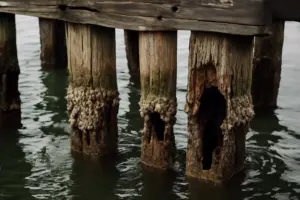
Before we talk technique, let’s address the why. I learned this the hard way early on. I sealed a pressure-treated dock in 2003 with a basic exterior stain and thought that was enough. Within four years, the wood started splintering, the fasteners corroded, and the structural integrity was compromised. That dock cost the homeowner $8,000 to replace what could have been maintained for a fraction of that with proper sealing.
Wood docks live in an exceptionally harsh environment. Salt water, UV exposure, freeze-thaw cycles, and constant moisture create conditions that break down unprotected wood in months, not years. Pressure-treated lumber resists rot, but it doesn’t resist weathering. A proper penetrating sealer—not a surface coating—fills the wood’s pores and prevents moisture from entering while allowing the wood to breathe.
The key insight: sealing isn’t cosmetic. It’s structural maintenance. Every month you delay is another cycle of moisture infiltration eating away at your dock’s fibers from the inside out.
Understanding Dock Material and Sealing Needs
This matters because your material determines everything that follows. If you’ve already read our comparison of composite versus pressure-treated versus ipe lumber, you know the landscape. Here’s the practical takeaway for sealing specifically:
- Pressure-treated wood: Requires routine sealing every 2–3 years to maintain water resistance and appearance.
- Ipe (tropical hardwood): Benefits from oiling for appearance and UV protection, but survives decades unsealed due to natural density.
- Composite: Never needs sealing—it’s engineered to shed water.
This post focuses on pressure-treated docks, which represent the vast majority of residential installations and absolutely require a sealing strategy to stay safe and attractive.
Preparing Your Dock for Sealing: The Most Critical Step
I check this first every time: your dock cannot be sealed until it’s clean and dry. Skipping prep is the single biggest mistake homeowners make. You can use the best sealer in the world, but if you apply it to a dirty, damp surface, it won’t penetrate properly.
Cleaning: Pressure Wash or Soft Scrub
For a dock that’s been exposed for years, power washing at 1,500–2,000 PSI removes algae, salt deposits, and surface oxidation. However—and this is critical—do not use anything over 2,500 PSI on pressure-treated wood. High pressure can actually damage the wood fibers and open them in the wrong way.
If your dock is relatively new or not heavily fouled, a soft-bristle brush and a cleaner like Olympic Deck Cleaner or a 1:10 bleach-water solution works just as well and takes less time. I typically scrub by hand, rinse thoroughly, and let the dock dry for 48 hours before sealing in a dry forecast.
Specifically, I look for any visible mold (black spots), mineral deposits, or loose paint. Remove all of it. Your sealer’s job is to protect clean wood, not to hide problems.
Drying Time Is Non-Negotiable
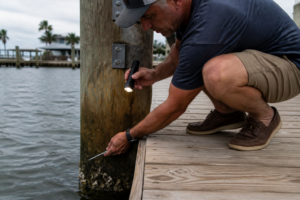
After cleaning, wood needs 48–72 hours of dry conditions to reach the moisture content where sealers work best. I always carry a moisture meter to check. You’re looking for wood moisture at or below 20%. If you’re rushing and the wood is still damp, the sealer will sit on top rather than penetrate, and you’ll have a slick, peeling mess within months.
In coastal climates, humidity is always present, so I schedule sealing work for the driest part of summer when I know we’ll have several dry days in a row. Don’t seal if rain is forecast within 48 hours of application.
Choosing the Right Sealer: Penetrating vs. Film-Forming
Here’s where product choice makes a massive difference. There are two general categories of wood sealers: penetrating and film-forming (surface coatings). For dock work, penetrating sealers are superior, and I’ll explain why.
A film-forming sealer (traditional deck stain or polyurethane) sits on top of the wood and creates a protective shell. Sounds good in theory, but on a dock that’s wet constantly, that film cracks, peels, and requires complete removal and reapplication every 1–2 years. I’ve spent hours scraping old deck stain. Never again.
A penetrating sealer soaks into the wood and hardens inside the grain. It doesn’t form a shiny surface—it leaves the wood looking natural—but it lasts longer, doesn’t peel, and can be reapplied without stripping. Water beads on it, but it breathes, so moisture that gets past the surface can escape.
My Top Pick: SEAL-ONCE Marine Penetrating Wood Sealer
After two decades, I’ve narrowed my choice to one primary product: SEAL-ONCE Marine Penetrating Wood Sealer and Waterproofer, Clear, 1 Gallon. At $66.98 per gallon, it costs more upfront than generic exterior stains, but it’s worth every penny because of performance and longevity.
Why this product specifically? SEAL-ONCE is a water-based penetrating sealer that contains UV blockers to prevent graying and has excellent salt-water resistance—critical for coastal docks. It penetrates 3–5 millimeters into the wood, doesn’t peel, and reapplication is straightforward because you don’t strip the old layer. Coverage runs about 300–400 square feet per gallon depending on wood porosity, so a typical 12-by-16-foot dock (192 square feet) needs roughly half a gallon per coat.
I’ve used this sealer on over 150 docks. The wood stays rich and protected, and I rarely hear complaints about premature failure. That’s a testimonial worth more than a discount.
Budget Alternative: SEAL-ONCE Marine Ready Mix (2 Gallon)
If your dock is large or you’re sealing multiple structures, the SEAL-ONCE Marine Ready Mix Penetrating Wood Sealer, 2 Gallon, Clear delivers the same protection at better per-gallon pricing. Larger containers always cost less per unit. This is the option I recommend when you’re doing more than one dock or want to keep extra on hand for touch-ups.
The Sealing Process: Step-by-Step Application
With prep complete and the right product in hand, application is straightforward. However, technique matters.
Tools You’ll Need
- Roller with 1/2-inch nap (for flat surfaces)
- Brush (angled sash brush for edges and railings)
- Paint tray or bucket
- Drop cloths or tarps (sealer drips)
- Painter’s tape (optional, for borders)
- Stir stick (essential—don’t shake)
Application Steps
- Stir, don’t shake. Shaking introduces air bubbles. Use a stick to stir SEAL-ONCE thoroughly for 2–3 minutes.
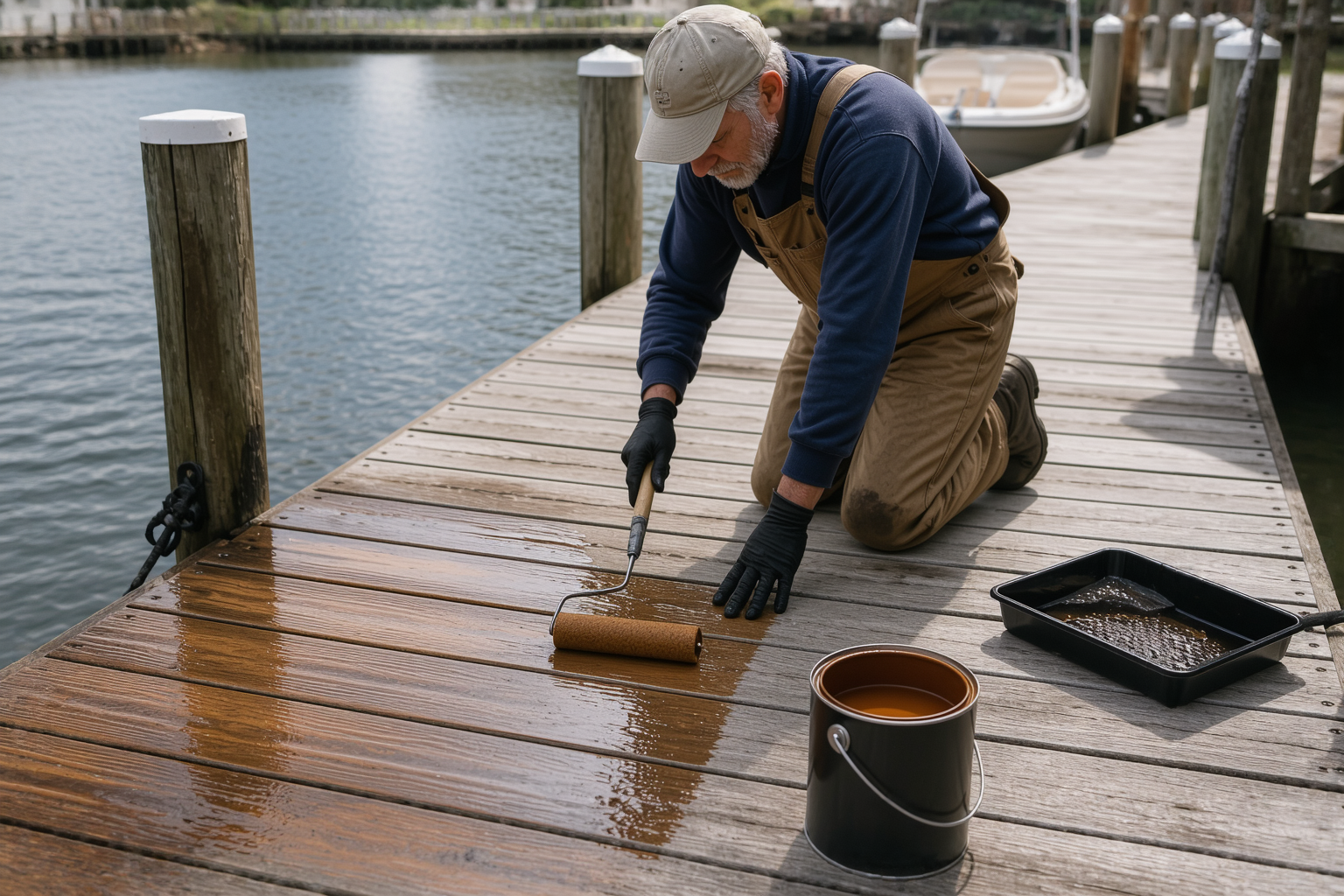
- Work in sections. On a 192-square-foot dock, I divide it into quadrants to maintain a wet edge. This prevents lap marks.
- Apply with a roller. Pour sealer into a tray and roll it on in overlapping passes, working parallel to the wood grain. Don’t overwork it. One good coat is better than two thin, streaky ones.
- Brush edges and railings. Switch to a brush for any areas the roller can’t reach. Railings, posts, and the dock’s perimeter need the same protection as the decking.
- Check coverage as you go. Watch for dry spots or missed areas. The sealer should look uniform and slightly wet after application.
- Allow proper dry time. SEAL-ONCE dries to the touch in 4–6 hours but needs 24–48 hours before foot traffic. Don’t use your dock for at least 24 hours, though 48 hours is safer in humid climates.
- Sealing wet wood: I cannot stress this enough. Moisture blocks penetration. Wait for dryness.
- Using the wrong type of sealer: Film-forming stains look glossy but peel on docks. Stick with penetrating products.
- Over-thinning sealer: Some people dilute sealer to stretch it further. Don’t. Use it as-is for proper protection.
- Ignoring railings and post ends: Wood grain runs vertically on posts, and sealer penetrates more deeply there. These areas dry out faster and need extra attention.
- Sealing too frequently: Yearly sealing isn’t necessary and wastes product. Stick to the 2–3 year schedule unless water no longer beads.
- ABYC — marine electrical and construction standards
- U.S. Army Corps of Engineers — permitting for work in navigable waters
- NOAA Tides & Currents — tidal range and water level data for your site
Do You Need a Second Coat?
This depends on wood porosity and your climate. New or freshly cleaned pressure-treated wood drinks sealer. A second coat, applied 48 hours after the first, provides deeper penetration and longer protection—I recommend it for most residential docks. However, a single coat provides adequate water protection for 12–18 months in moderate climates. For maximum longevity (3+ years between reapplication), apply two coats.
How Often Should You Reseal Your Dock?
This is the question I get asked most, and the answer depends on three variables: wood type (we’re assuming pressure-treated here), climate severity, and foot traffic. In my experience along the Gulf Coast, where docks face relentless sun, salt spray, and humidity, I recommend resealing every 2–3 years.
Here’s how to know when it’s time: water no longer beads on the surface—it absorbs or sits flat. The wood may also show graying or fading of color. Once you notice either sign, it’s time to seal again.
Specifically, I schedule dock maintenance inspections every spring. I walk the entire structure and test water beading in several spots. If water sits flat, I plan sealing for early summer. As a result, I never let a dock get so deteriorated that it needs power washing or intensive prep again. Light cleaning and immediate resealing keeps everything in rotation.
For docks in freshwater or less harsh climates (Northern lakes, protected areas), you might stretch resealing to 3–4 years. Conversely, docks exposed to direct salt spray or heavy use may need attention every 18–24 months.
Common Mistakes I’ve Seen (And How to Avoid Them)
The Real Cost of Proper Dock Sealing
Let me put this in perspective. A typical 12-by-16-foot pressure-treated dock costs roughly $3,000–$5,000 to build. Sealing that dock every 2–3 years with quality sealer runs about $100–$150 in materials plus your time (roughly 4–6 hours of labor). Over 20 years, that’s maybe $2,000 in sealer costs.
Replacing that same dock due to rot and deterioration costs $8,000–$12,000. The math is obvious: spend a little on sealing now, avoid massive expense later.
How to Seal a Dock: Final Thoughts and Your Action Plan
Knowing how to seal a dock correctly is a skill that pays dividends for the life of your structure. The process itself is simple: clean, dry, apply quality sealer in thin, even coats, and plan for reapplication every 2–3 years. The product I’ve trusted for 20 years is SEAL-ONCE Marine Penetrating Wood Sealer because it penetrates deeply, doesn’t peel, and resists salt-water degradation.
Start this spring. Get your dock clean, let it dry, and seal it with a quality penetrating product. Your dock will reward you with years of safety, beauty, and structural integrity. That’s not just my recommendation—that’s two decades of Gulf Coast dock work talking.
—Frequently Asked Questions
How long does SEAL-ONCE sealer take to dry before using the dock?
SEAL-ONCE dries to the touch in 4–6 hours but needs 24–48 hours before foot traffic. I recommend waiting the full 48 hours in humid coastal climates to ensure complete curing before you use your dock.
Can I seal my pressure-treated dock right after power washing it?
No. After power washing, wood needs 48–72 hours of dry conditions to reach the moisture content where sealers work best. I use a moisture meter to check for 20% or below before sealing. Rain forecast within 48 hours of application will also prevent proper penetration.
How much SEAL-ONCE sealer do I need for a 12-by-16-foot dock?
A typical 12-by-16-foot dock (192 square feet) needs roughly half a gallon per coat because SEAL-ONCE covers about 300–400 square feet per gallon depending on wood porosity. For maximum longevity, I recommend a second coat applied 48 hours after the first.
What’s the best way to know my dock needs resealing again?
The key signs are when water no longer beads on the surface—it absorbs or sits flat—and the wood shows graying or fading color. I test water beading in several spots during spring inspections and plan resealing for early summer if needed.
Sources and further reading
About This Article

Written by Trent Hollis. Waterfront homeowner turned DIY obsessive. After two decades tinkering with my own dock, seawall, and boat lift on the Gulf Coast, I share everything I've learned about waterfront construction, boat lift maintenance, and coastal living projects. More about this site.
Scope and limits. Trent is a waterfront homeowner, not a licensed marine contractor. Structural, electrical, and lift work should go to a licensed marine contractor, and most in-water work needs a permit before you start.
Verify this against a primary source
Specifics change, and your situation may differ from the one described here. These are the authorities worth checking directly: