Two decades of Gulf Coast dock work means I’ve watched countless beautiful installations go up—custom decking, built-in seating, underwater lighting—and I can count on one hand how many had safety equipment staged where it actually belonged. A near-tragedy on a Pensacola Bay renovation back in 2011 was the wake-up call that fundamentally shifted how I approach every project since then. One crew member, experienced and careful, stepped on wet boards near the dock edge. Eight feet of water. Not a strong swimmer. We pulled him out because another guy happened to have a rope in his hand and reacted fast. That’s not a plan. That’s luck. And luck runs out.
The gap between what dock owners invest in looks versus what they allocate to safety equipment is striking. Thousands for fresh finishes and hardware. Almost nothing for the gear that actually keeps people breathing. I understand the appeal—a life ring doesn’t photograph as well as a new cleat or a fresh coat of sealant. But when someone unexpectedly finds themselves in the water—and statistically, someone eventually will—none of that aesthetic work matters even slightly.
What follows is a systematic breakdown of what belongs on your dock, why each component serves a critical function, and specifically what I’ve chosen after twenty years of hands-on waterfront construction. Some of this comes from codes and formal training. Plenty of it comes from the expensive, sometimes frightening lessons that only experience teaches.
Why Unequipped Docks Put People in Real Danger
During a 2011 renovation I was managing on Pensacola Bay, a four-person crew was working on private residential property. One of my team members—experienced, conscientious, more than two decades in marine construction—lost his footing on a wet dock surface and went into the water. The depth was manageable at eight feet. His swimming ability was not.
His extraction happened quickly, but only because another crew member was holding a length of rope and made a split-second decision to act. The outcome could have been catastrophically different. From that date forward, every single proposal I’ve written includes non-negotiable safety equipment specifications.
According to U.S. Coast Guard data, drowning represents approximately 75% of recreational boating fatalities each year. A substantial number occur in proximity to stationary structures—docks, piers, loading ramps. Tidal movement, hypothermic shock, and basic physical exhaustion can disable even confident swimmers in a matter of minutes. Positioning appropriate rescue tools within immediate reach isn’t excessive caution. It’s fundamental responsibility.
What Your Dock Must Have: A Complete Safety Equipment Breakdown
I’m being straightforward here. This isn’t an optional list or a collection of nice-to-have items. These represent what I consider non-negotiable for any dock where humans are present—whether you’re talking about a private recreational pier or a commercial vessel operation. Some components are mandated by code in specific jurisdictions. Every single item is mandated by basic logic and human decency.
1. Throwable Life Ring (Type IV PFD)
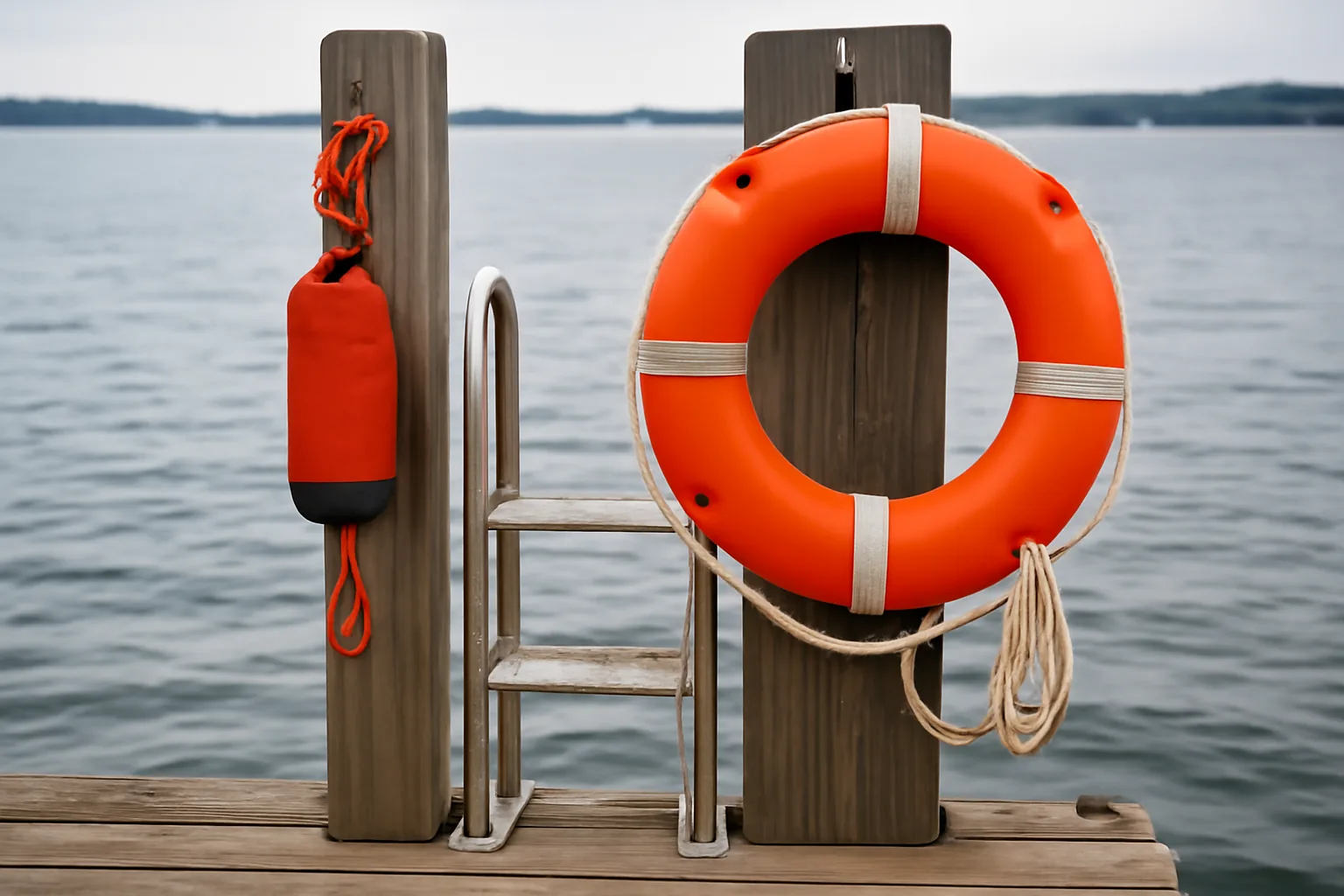
Your immediate rescue tool comes in the form of a throwable ring buoy—designated as a Type IV Personal Flotation Device under U.S. Coast Guard classification standards—positioned where any person on your dock can retrieve it in fewer than five seconds. This demands placement that’s conspicuous, within arm’s reach, and never concealed in storage or enclosed containers. Federal regulation 46 CFR 25.25 mandates a minimum of one Type IV throwable device on most recreational craft. Numerous coastal states expand this requirement to include fixed waterfront infrastructure that accommodates public use.
Private residential docks don’t have a single federal requirement—but don’t mistake that absence for permission to skip this step. From my experience, incidents at private docks occur at higher frequency relative to user count than incidents at professionally managed marinas, largely because supervision is minimal and observation density is lower. Position your ring buoy at the water-access terminus of the dock, not toward the shore connection. That’s statistically where people end up going overboard.
2. Reaching Pole or Rescue Hook
A reaching pole—ideally extending 12 feet or longer for typical residential installations—enables someone standing on solid ground to deliver assistance without themselves entering the water. This distinction carries enormous significance. Research shows that untrained individuals who enter the water attempting rescue represent a disproportionate share of drowning fatalities. Your rescuer stays dry and planted on the dock. Deploy the pole.
Aluminum poles fitted with a shepherd’s crook end piece perform best in these applications. They remain lightweight enough for rapid deployment, resist saltwater corrosion, and maintain grip even when your hands are wet. Quality examples retail between $35 and $60. Secure your pole horizontally to the dock structure using quick-release brackets—fastening methods that don’t require wrenches or screwdrivers are essential when seconds count.
3. Dock Ladder — Accessible From the Water
People often overlook a critical detail about ladders: accessibility matters more than mere presence. I’ve examined dozens of installations where the lowest rung terminated a full 18 inches above the waterline, making grip nearly impossible for someone struggling in the water. When you’re exhausted, shivering, or experiencing panic, those 18 inches become an impassable barrier.
Your ladder design should extend minimum 12 inches into the water column at the lowest tidal stage. ABYC standards specify at least 14 inches between consecutive rungs and mandate slip-resistant tread surfaces. Install your ladder where it aligns with your life ring positioning zone. In saltwater environments, I consistently specify either stainless steel or hot-dip galvanized construction—aluminum degrades rapidly in brackish water conditions.
4. Non-Slip Decking Surface
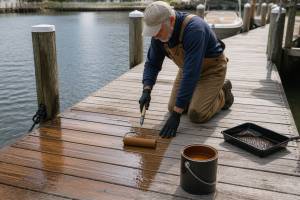
Slippery surfaces create the emergency condition in the first place, which is precisely why traction belongs on any comprehensive dock safety equipment inventory. Smooth composite materials, painted wooden boards, and uncovered fiberglass all become treacherous when saturated. Over the years, I’ve torn out and replaced numerous decks that impressed aesthetically while creating genuine hazard.
Apply marine-rated anti-slip adhesive strips (3M Safety-Walk Series 600 represents my most common specification) across all foot traffic pathways, particularly around ladder access points and zones where crew members typically crouch near cleats. When replacing an entire deck, grooved composite material featuring a brushed finish commands a premium but delivers genuinely superior grip. Material costs for mid-range non-slip deck resurfacing typically run $8–$15 per linear foot.
5. Dock Lighting for Nighttime Safety
Low-voltage LED luminaires installed on your dock serve purposes that extend well past ambiance. These fixtures prevent stumbling accidents, help boat operators judge approach angles and clearances during returns, and substantially improve emergency response effectiveness during darkness. USCG Navigation Rules mandate white illumination visible from all directions on fixed structures within designated navigable waterways—your local jurisdiction’s authority having responsibility (AHJ) can clarify specific requirements for your property.
At the bare minimum, illuminate the walking surface itself, the ladder entry location, and hardware or cleats positioned at foot height where people might catch a line or trip. Solar-powered step lights retail for $15–$30 per unit and require zero electrical infrastructure. If your dock sees regular nighttime activity, budget for a hardwired 12-volt installation, typically costing $200–$500 installed depending on total linear footage.
6. First Aid Kit — Marine-Rated
Standard residential first aid kits aren’t formulated for waterfront environments. Your dock kit requires waterproof external packaging, contents rated for maritime conditions, and supplies tailored to water-specific injuries: emergency reflective thermal blankets for cold-water shock protocol, heavy-duty wound dressings for propeller trauma, and a face shield for rescue breathing. The American Red Cross recommends a minimum 50-piece configuration for recreational waterfront properties.
Waterproof rigid containers cost $40–$80. Spring inspection should become routine—replace any items past their marked dates, and verify that adhesive components haven’t deteriorated from salt air and humidity. I mount mine in a bright white box with a red cross symbol clearly visible, positioned at the dock entrance where it can’t be missed in an actual crisis.
Selecting and Positioning a Life Ring That Actually Stays Put
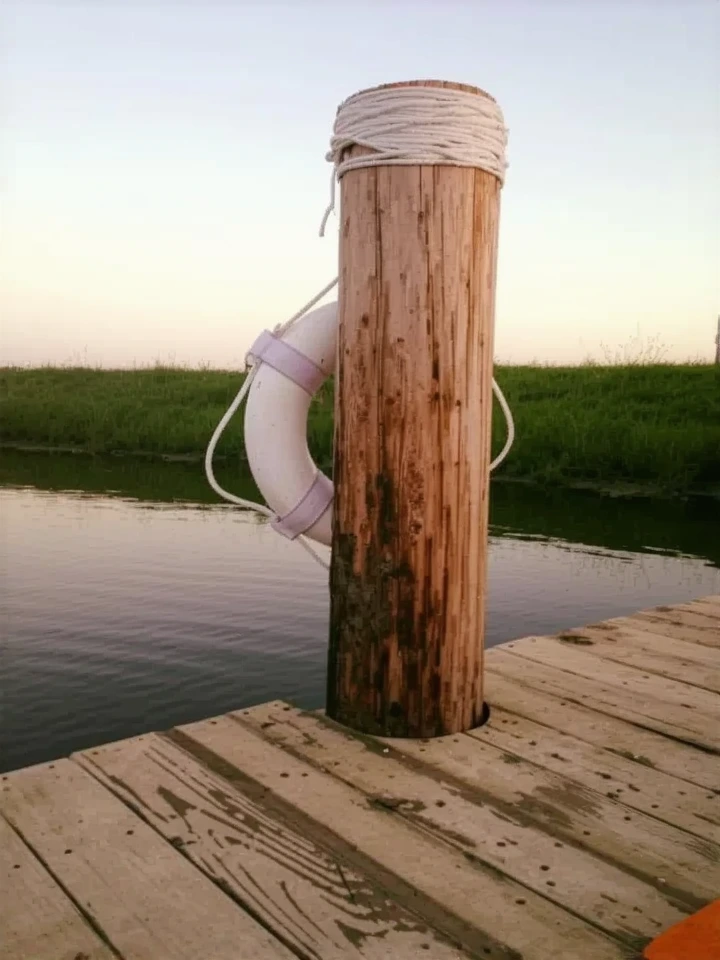
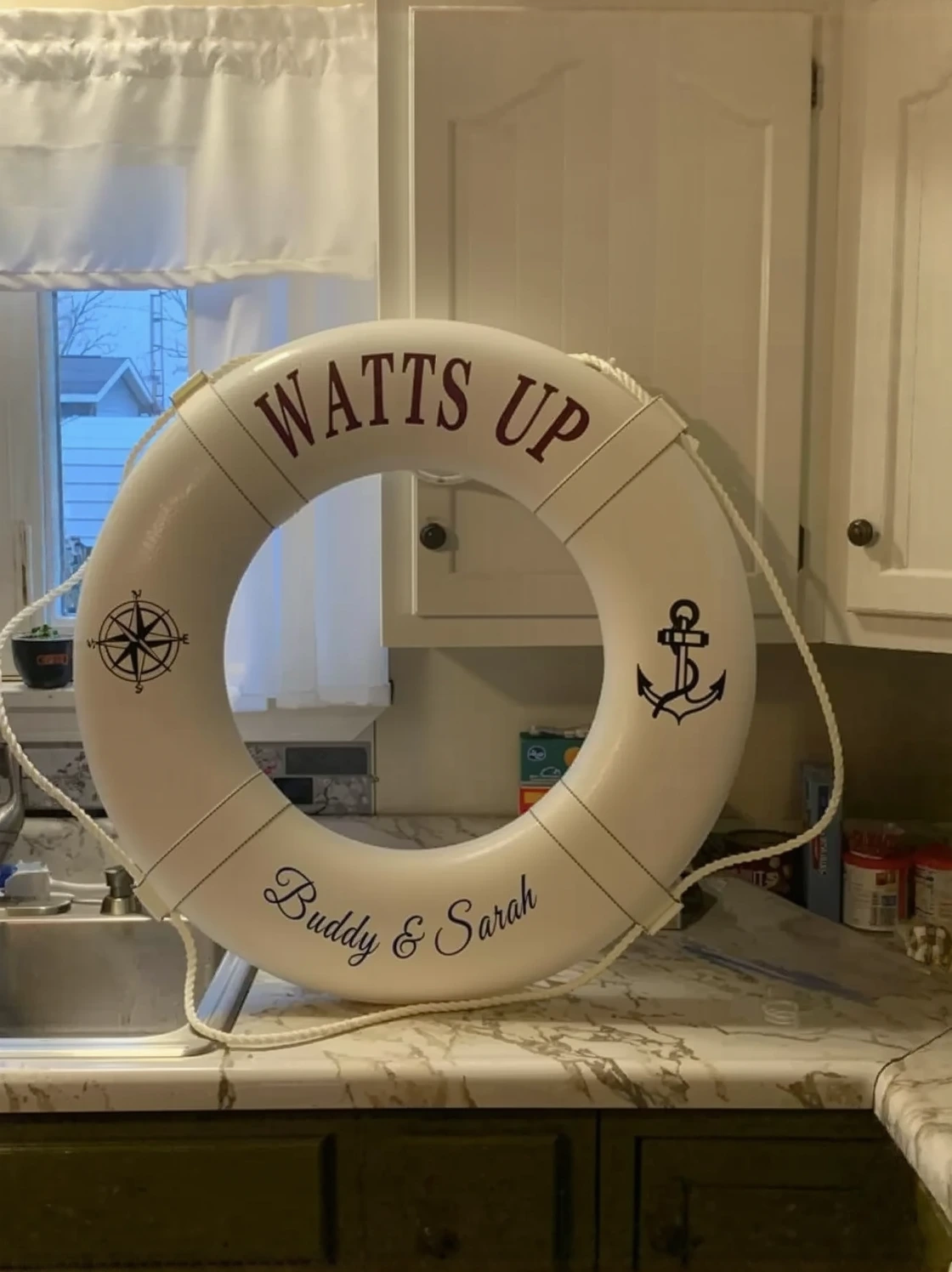
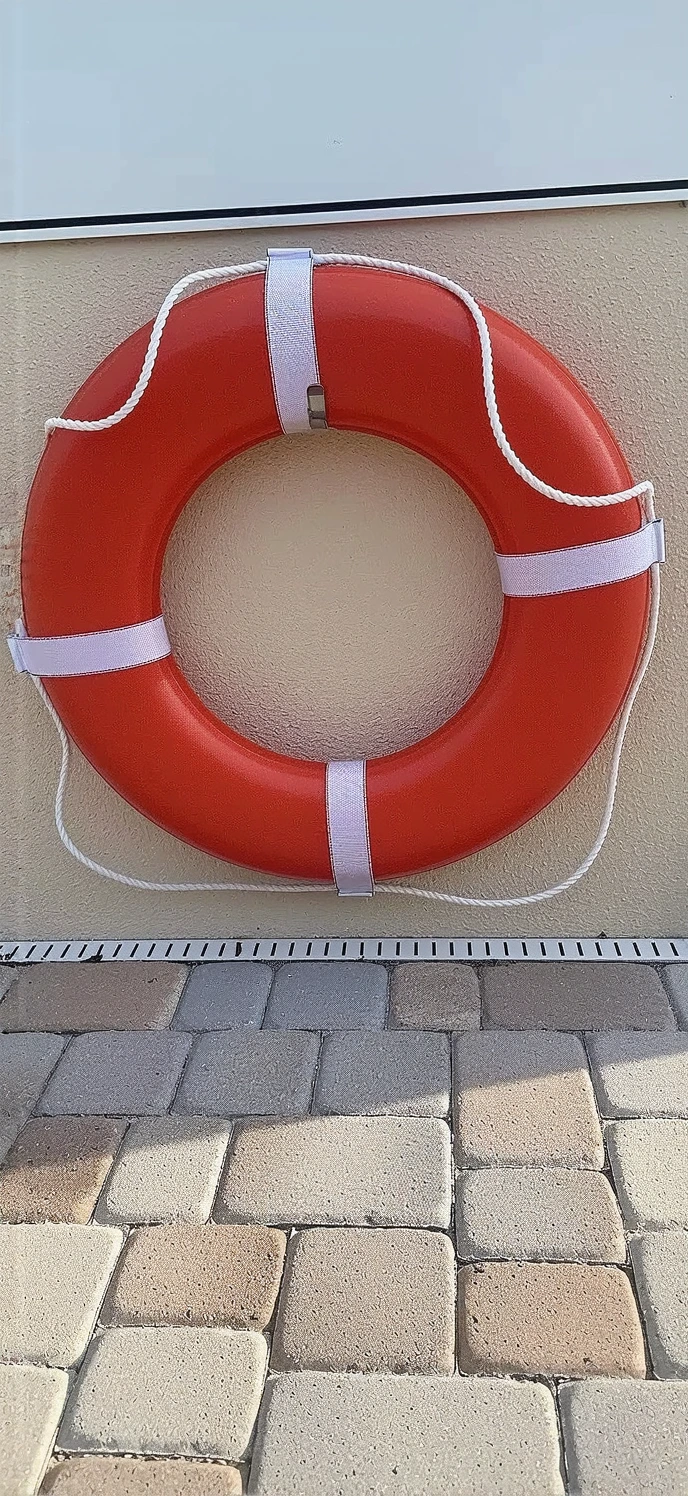
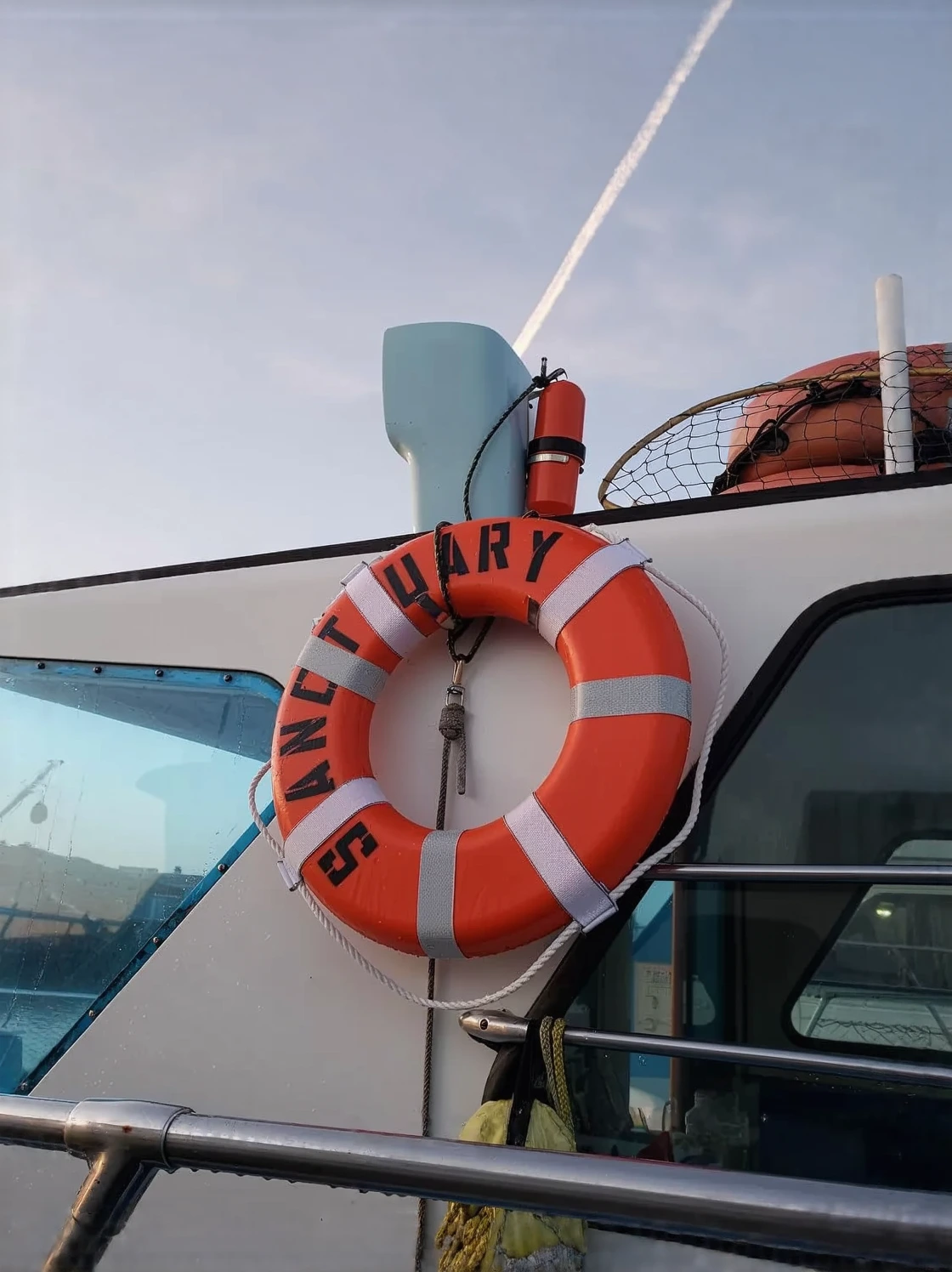
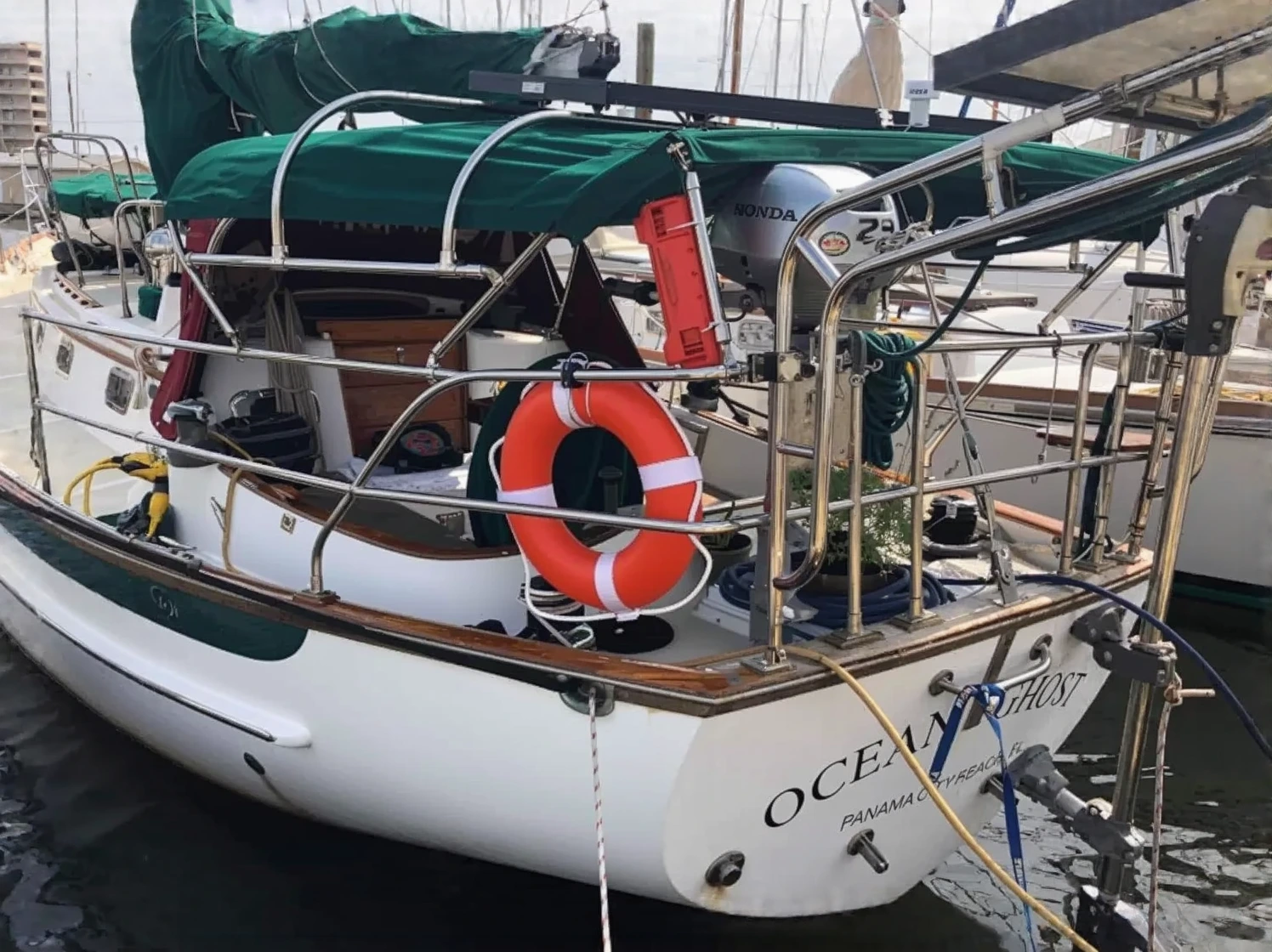
A throwable life ring only delivers value if someone in panic mode can physically locate and grab it in seconds. I’ve observed plenty of installations where the ring sits tucked away in a storage locker or mounted so elevated it becomes purely decorative. You require a device that remains visible, stays within immediate reach, and is attached securely enough that wind, wave action, or casual mishandling won’t cause loss when you need it most.
What works
- Web strap attachments keep mounting rigid against your post or railing structure—I’ve maintained mine through major Gulf weather systems without any shifting or migration.
- The white coloration remains identifiable from a distance and doesn’t degrade, yellow, or fade the way lower-grade plastic rings deteriorate across a single season.
- The 20-inch diameter supplies adequate grip area for adult hands under duress, with flotation capacity sufficient to support an adult without dragging them deeper.
What doesn’t
- Proper web strap installation demands hardware bolts—using nails or inadequate fasteners completely undermines the installation’s function.
- This device functions as a flotation assist, not as a comprehensive safety solution—it pairs with first aid training and CPR knowledge, not replaces them.
I almost didn’t mount one at all on a client’s dock in 2010—figured the insurance would cover it if something happened. Six months later, their teenage nephew went overboard during a party, and that ring was the only thing between a bad scare and a tragedy I wouldn’t have recovered from. Get a Jim-Buoy GW-20 G-Series Life Ring with Web Straps in White and mount it properly.
How Many Throwable Rings Does a Condo or HOA Dock Actually Need?
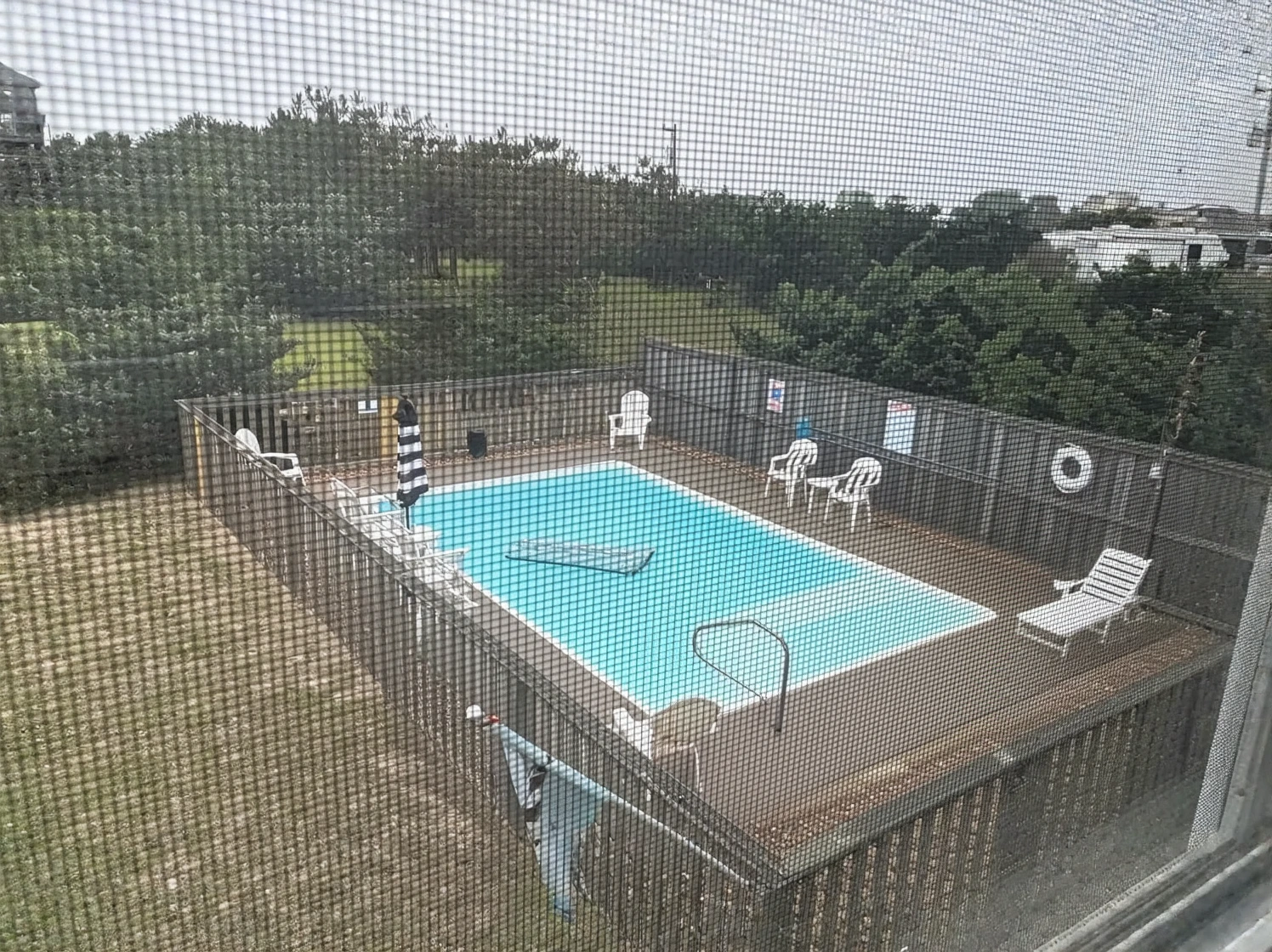
This is where a lot of condo and HOA dock committees miscalculate: they manage their multi-slip arrangement with the same safety framework designed for a homeowner’s single-family structure. That’s a liability exposure waiting to materialize. Twenty years working Gulf Coast marinas has shown me both the close calls and the actual incidents that result from this miscalculation. A condo dock falls into the classification of public accommodation under USCG guidance and state marina safety statutes—meaning your throwable equipment requirements expand proportionally with facility size and slip count. The answer isn’t one ring deployed across the entire dock. It’s one USCG-approved Type IV throwable stationed where any user can reach it immediately from every slip location, or at minimum positioned every 200 linear feet along walkways, using whichever interval creates denser coverage. Your insurance underwriter and your association’s liability provisions almost certainly hinge on meeting this standard, irrespective of what your governing documents explicitly state.
I grasp why the single-unit approach feels tempting—one device mounted at the main entry reduces complexity and cost. Picture this scenario: it’s August on the Gulf, water temperature hits 89 degrees, and someone goes in at Slip 12 on a 16-slip property. That person shouldn’t need to wait for a neighbor to sprint 150 feet to access the only safety tool on site. During actual emergencies, fractions of a second determine outcomes. I’ve retrieved people from the water who simply couldn’t hold on long enough for assistance to arrive from across the property.
The approach I recommend: coordinate with your dock committee or management firm to position marked, highly visible throwable stations along the entire walkway—typically one per individual slip if your association owns separate slip infrastructure, or one for every 50–75 linear feet on shared pathways. Mount these on wall brackets or plaques, always accessible without keys or locks. Establish inspection rhythms aligned with your other dock maintenance cycles—quarterly or twice yearly—checking the ring itself for sun damage and examining attached rope for salt deterioration and fraying. File every inspection record in your association’s safety documentation. Your insurance provider will request this maintenance history, and beyond that, you’ll have genuine confidence that your residents actually have recourse during crisis.
For homeowners managing a private single-slip installation, these requirements don’t apply. One correctly positioned throwable per dock meets the established standard, and that’s the framework throughout the rest of this discussion. But if you’re reading this and supervising a condo dock with multiple slips, expand accordingly. The legal and human stakes depend on it.
Frequently Asked Questions
How deep should a dock ladder extend into the water?
Your ladder’s lowest rung should extend minimum 12 inches into the water column at the lowest tidal stage. ABYC standards also mandate at least 14 inches between consecutive rungs and slip-resistant tread surfaces so exhausted swimmers can actually grip and climb out.
What length reaching pole do I need for residential dock rescue?
A reaching pole ideally extends 12 feet or longer for typical residential installations, letting someone on solid ground deliver assistance without entering the water themselves. Aluminum poles with a shepherd’s crook end piece work best and typically retail between $35 and $60.
How many throwable life rings does a condo dock need?
Position one USCG-approved Type IV throwable at every slip location, or at minimum every 200 linear feet along walkways, so any user can reach it immediately without sprinting across the property during an actual emergency.
What anti-slip material should I use on my dock deck?
Apply marine-rated anti-slip adhesive strips like 3M Safety-Walk Series 600 across foot traffic pathways, particularly around ladder access points. For full deck replacement, grooved composite material with a brushed finish delivers superior grip, typically costing $8–$15 per linear foot.
Sources and further reading
About This Article

Written by Trent Hollis. Waterfront homeowner turned DIY obsessive. After two decades tinkering with my own dock, seawall, and boat lift on the Gulf Coast, I share everything I've learned about waterfront construction, boat lift maintenance, and coastal living projects. More about this site.
Scope and limits. Trent is a waterfront homeowner, not a licensed marine contractor. Structural, electrical, and lift work should go to a licensed marine contractor, and most in-water work needs a permit before you start.
Verify this against a primary source
Specifics change, and your situation may differ from the one described here. These are the authorities worth checking directly:
- ABYC — marine electrical and construction standards
- U.S. Army Corps of Engineers — permitting for work in navigable waters
- NOAA Tides & Currents — tidal range and water level data for your site