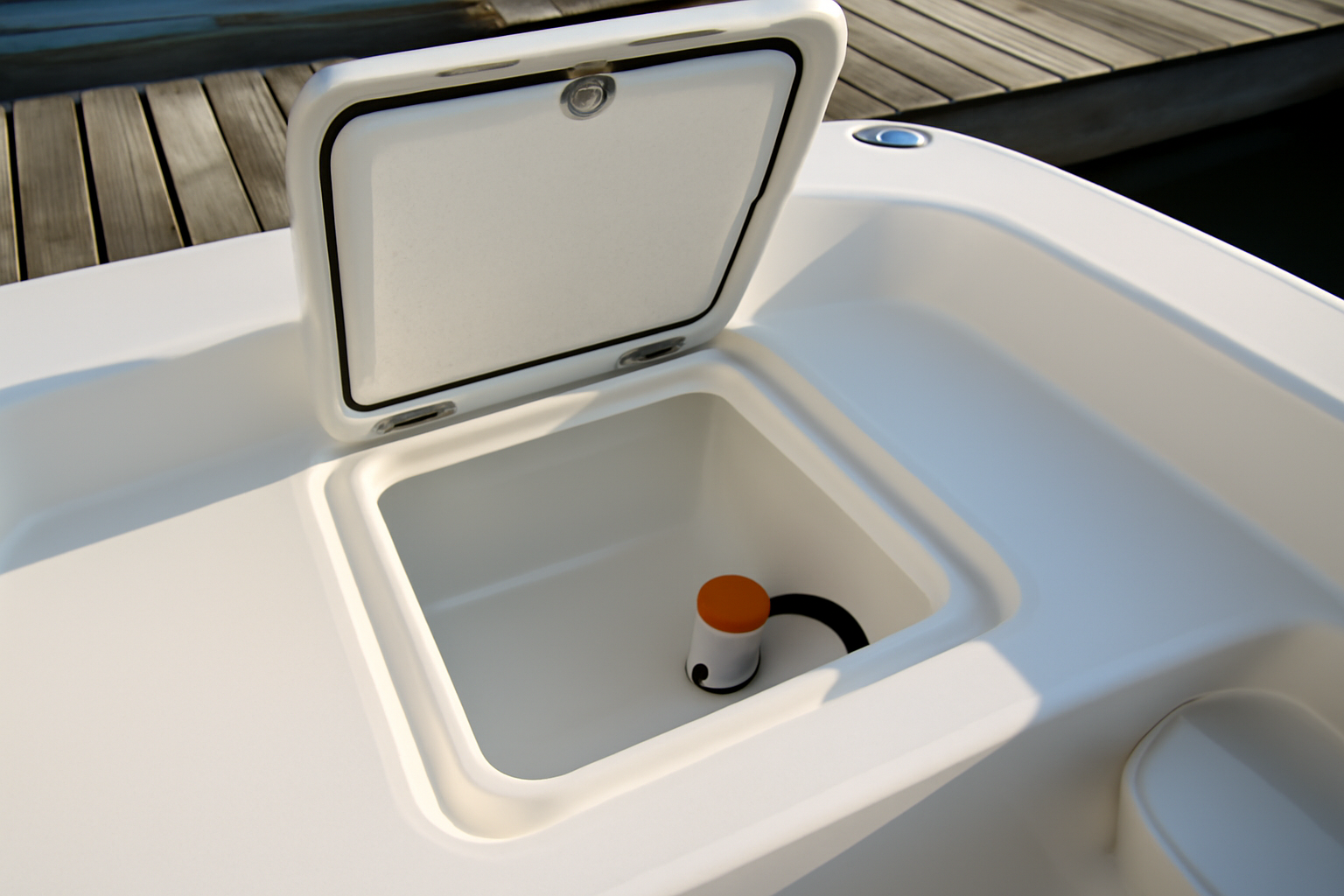
The bilge hatch is the first thing I check when stepping aboard any vessel — before I look at the engine, before I inspect the rails, before anything else. What I find in those first five seconds tells me more about an owner’s maintenance habits than a full conversation ever could. Back in the summer before last, a boat owner called from down near Pensacola in a full panic. He’d lifted that hatch on a Monday and spotted two inches of standing water pooled against the hull. His mind went immediately to catastrophe. One phone conversation later, though, the cause turned out to be simple: his automatic bilge pump’s float switch had jammed in place. Thirty-five dollars and an afternoon later, the boat was fine. But that incident drives home a crucial point — understanding the difference between normal bilge moisture and an actual emergency isn’t optional knowledge. It’s the foundation of responsible boat ownership.
My background spans two decades along the Gulf, from the Mobile Bay region through the Florida Panhandle’s network of shallow anchorages and marina complexes. In that time, I’ve opened more bilge hatches than most people will see in a lifetime. Some revealed bone-dry compartments. Others showed water situations serious enough to warrant immediate investigation. The variation almost always traced back to the same three factors: the structural integrity of the hull itself, the condition and reliability of through-hull fittings and seals, and whether the boat’s owner was actually paying attention. What follows is the same decision-making process I run through when I board a boat for the first time and pop open that hatch to look inside.
What Is “Normal” Bilge Water Accumulation?
Here’s what gets left out of most boat maintenance manuals: virtually every vessel ever built collects some water in the bilge compartment over time. This isn’t evidence of poor construction or a flaw in design. It’s simple physics playing out in the marine environment. Moisture condenses on internal surfaces as temperatures shift between day and night. Rain finds entry points through deck hardware, hatch seals, and rope clutches that weren’t perfectly sealed. Shaft seals and stern drive assemblies leak by design — a small amount of dripping is intentional and normal, with industry guidance typically citing one to three drops per minute as acceptable when the engine is running. This aligns with standards maintained by the American Boat and Yacht Council (ABYC).
The real question to ask isn’t whether bilge water exists. Instead, ask how much water is accumulating and at what rate. In my experience walking dock lines after decades in this trade, one or two cups of water sitting in the bilge after a week of weather and dock time is normal and nothing to lose sleep over. But six to eight inches collecting after just one weekend on the water? That’s a signal something substantial has failed. You’re likely dealing with a through-hull fitting that’s given up, a shaft seal that’s compromised, a section of the hull with a structural crack, or an internal plumbing system — either the freshwater distribution or the exhaust loop — that’s sprung a leak.
The hard lesson came on my own 23-foot center console back in 2009, when I watched water levels creep upward over the course of three weeks and did nothing about it. My reasoning at the time was fuzzy — I chalked it up to the typical humid summers down here on the Coast. Wrong call. The actual culprit was a raw water cooling hose that had developed a tiny crack right next to one of the hose clamps holding it in place. By the time I tracked down the source, my bilge pump motor had burned itself out from constant cycling. I ended up spending roughly four hundred dollars on replacement parts and lost an entire Saturday to repairs instead of enjoying the water. Lesson absorbed.
Keeping Your Boat Bilge Dry Between Outings: A Methodical Inspection Protocol
The strategy for maintaining a dry bilge between trips involves building a reliable inspection habit — not waiting for the annual haul-out to check things, but conducting a quick assessment every time you secure the boat. I tell every vessel owner the same thing: treat the bilge hatch exactly the way you’d treat your vehicle’s oil level before a road trip. Make it routine. Do it before you cast off and again when you tie up.
Step 1: Establish What “Normal” Looks Like for Your Hull
My first move with any vessel I’m evaluating is to set a reference point for baseline conditions. I run the bilge pump until it’s completely empty. I note the date on my phone. Exactly 48 hours later, I return and measure whatever water has collected — even a rough estimate by eye is worthwhile data. I document that number. That baseline becomes your compass. It tells you what accumulation rate is typical for that specific boat, that season, and that berthing location. Without establishing a baseline, every bit of moisture looks like a potential disaster.
Step 2: Examine All Through-Hull Penetrations Systematically
Your through-hull fittings represent your single greatest vulnerability point when it comes to unexpected bilge water. A 25-foot boat designed for coastal running might have between four and ten through-hulls: transducers for navigation, depth-finding electronics, raw water intake ports, drain paths from the cockpit. Each one punches a hole in the hull below the waterline. Each represents a potential weak link. The ABYC standard H-27 mandates that every below-waterline through-hull must have a seacock installed on the interior side — if your boat is missing these, installing them becomes a priority upgrade that supersedes most other maintenance tasks.
Conduct a visual assessment of every fitting you find for signs of active corrosion, visible cracking, or areas where the surrounding fiberglass feels soft or spongy to the touch. Bronze fittings develop dezincification as they age, and when this happens the metal shifts to a pinkish hue and takes on a crumbly texture. Plastic fittings degrade from prolonged UV exposure without protection. I’ve encountered fittings that appeared structurally sound when viewed from inside the boat but had thinned to nearly nothing on the exterior side because nobody had pulled the boat for inspection in three years running. Pay extra attention to any fittings located within half a foot of the waterline — these will flood your compartment fastest if they deteriorate.
Step 3: Assess Your Bilge Pump Capacity and Reliability
The bilge pump functions as your emergency backup system, not as a substitute for good maintenance. That said, it absolutely must be dependable when called upon. The U.S. Coast Guard hasn’t established a mandatory bilge pump specification for recreational boats under 26 feet in length, but established best practices in the marine industry recommend a minimum capacity of 500 GPH (gallons per hour) with automatic activation and a manual backup option. For vessels exceeding 26 feet, I recommend stepping up to a minimum of 1,500 GPH capacity.
Make it a habit to test the float switch mechanism each time you open the bilge compartment to check levels. Float switches are inexpensive to replace — the cost typically ranges between fifteen and thirty dollars — yet they fail with surprising regularity. Accumulated debris, thin films of oil, and corrosion deposits interfere with the switch’s mechanical motion. I’ve discovered plenty of boats where the pump motor itself was functioning perfectly fine but the float switch had gotten stuck in the off position for months on end. That’s a hazardous condition you won’t discover until the moment you really need the pump to work.
Sources of Bilge Water Beyond the Obvious Culprits
When through-hulls and shaft seals check out clean, a handful of other moisture sources often hide in plain sight throughout Gulf-region vessels. Identifying these will accelerate your troubleshooting and help you address problems before they spiral.
- Exhaust manifold seepage: The wet exhaust components and mixing elbows installed on fiberglass hulls develop fractures as they age, particularly in saltwater exposure. Even modest dripping from these assemblies multiplies quickly when the engine generates heat.
- Onboard water system failures: Potable water systems depend on standard hose assemblies and fitting connections that gradually loosen due to engine vibration over seasons of operation. One dripping fitting from the freshwater pump can deliver gallons of water into the bilge across a single overnight period.
- Cockpit drain valve malfunction: Many vessels route their cockpit drainage plumbing below the waterline. When the check valve in this drain line fails or becomes stuck, the boat can siphon seawater into the bilge during idle periods at the dock. This problem shows up constantly on older center console designs.
- Marine air conditioning condensate accumulation: Onboard air conditioning systems produce substantial quantities of condensation as they operate. If the discharge line becomes obstructed or was installed without proper pitch, all that water ends up dumping into the bilge rather than flowing safely overboard.
- Deck-mounted hardware leakage: Any deck fitting that’s bolted through the surface — whether that’s a cleat, a windlass mount, a rod holder — becomes a water entry point if it wasn’t bedded with proper sealant compound during installation. Rainwater will travel straight down through these penetrations.
I worked on a 32-foot express cruiser last spring that was pulling nearly two gallons of water into the bilge per day. We inspected every through-hull fitting and found nothing amiss. The actual problem? A bow cleat that hadn’t been properly sealed when it was originally installed. It had been leaking during every rainfall, and those three years of accumulated moisture had started to separate the fiberglass layers around the fastening holes. A single twelve-dollar tube of 3M 4200 marine sealant would have prevented what became a nine-hundred-dollar fiberglass repair.
Hull Coating Protection: Stopping Underwater Seepage Before It Starts
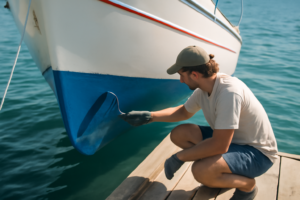
A floating switch malfunction ranks as a manageable repair — but a slow hull deterioration happening below the waterline represents a different category of problem. If you’re battling persistent bilge moisture and suspect that underwater deterioration or blistering is the underlying cause, addressing the hull coating itself prevents water from entering the system in the first place. That’s where your bilge pump stops having to work overtime.
What delivers results
- Ablative formulations continuously shed microscopic layers as the boat moves, which removes accumulated barnacles and slime that trap moisture against the hull and intensify seepage.
- Offers defense against both osmotic blistering deterioration and wood rot progression — both of which generate bilge moisture that a pump working alone simply cannot manage.
- Applies with sufficient thickness to provide seasonal protection without requiring mid-season reapplication, eliminating the need for frequent haul-outs.
What falls short
- Demands thorough surface preparation and dry application conditions — rushing the job or painting onto an already-blistered hull means investing a full weekend plus likely renting sanding equipment.
- Won’t resolve an ongoing leak originating from a failed through-hull or a structural hull fracture; it functions as preventative protection, not as a repair solution for active damage.
I’ll be honest—I almost skipped bottom paint on a restoration project because I thought a new bilge pump was enough, and within two weeks the water came back. That’s when I realized the hull was weeping, not the pump failing. TotalBoat JD Select Ablative Antifouling Bottom Paint (Black, Gallon) became non-negotiable after that.
Frequently Asked Questions
How much bilge water is normal between boat outings?
One or two cups of water sitting in the bilge after a week of weather and dock time is normal. Six to eight inches collecting after just one weekend signals something substantial has failed—likely a through-hull fitting, shaft seal, structural crack, or internal plumbing leak that needs immediate investigation.
What bilge pump capacity should my boat have?
For boats under 26 feet, industry best practices recommend a minimum capacity of 500 GPH with automatic activation and manual backup. For vessels exceeding 26 feet, I recommend stepping up to a minimum of 1,500 GPH capacity.
How do I establish a baseline for my boat’s normal bilge water?
Run the bilge pump until completely empty and note the date. Exactly 48 hours later, measure whatever water has collected—even a rough estimate by eye works. Document that number as your baseline, which tells you what accumulation rate is typical for your specific boat, season, and berthing location.
What’s an acceptable shaft seal drip rate when running?
Industry guidance typically cites one to three drops per minute as acceptable when the engine is running, aligning with standards maintained by the American Boat and Yacht Council. This small amount of dripping is intentional and normal by design.
Sources and further reading
About This Article

Written by Trent Hollis. Waterfront homeowner turned DIY obsessive. After two decades tinkering with my own dock, seawall, and boat lift on the Gulf Coast, I share everything I've learned about waterfront construction, boat lift maintenance, and coastal living projects. More about this site.
Scope and limits. Trent is a waterfront homeowner, not a licensed marine contractor. Structural, electrical, and lift work should go to a licensed marine contractor, and most in-water work needs a permit before you start.
Verify this against a primary source
Specifics change, and your situation may differ from the one described here. These are the authorities worth checking directly:
- ABYC — marine electrical and construction standards
- U.S. Army Corps of Engineers — permitting for work in navigable waters
- NOAA Tides & Currents — tidal range and water level data for your site